They pump ocean water, lift it to 4,400 metres altitude across a desert: Chile’s 3.5 billion‑dollar project to revive a copper mine
To continue extracting copper in one of the planet’s driest deserts, a Chilean mining company has embarked on a spectacular project: desalinating Pacific Ocean water before transporting it to its facilities situated…
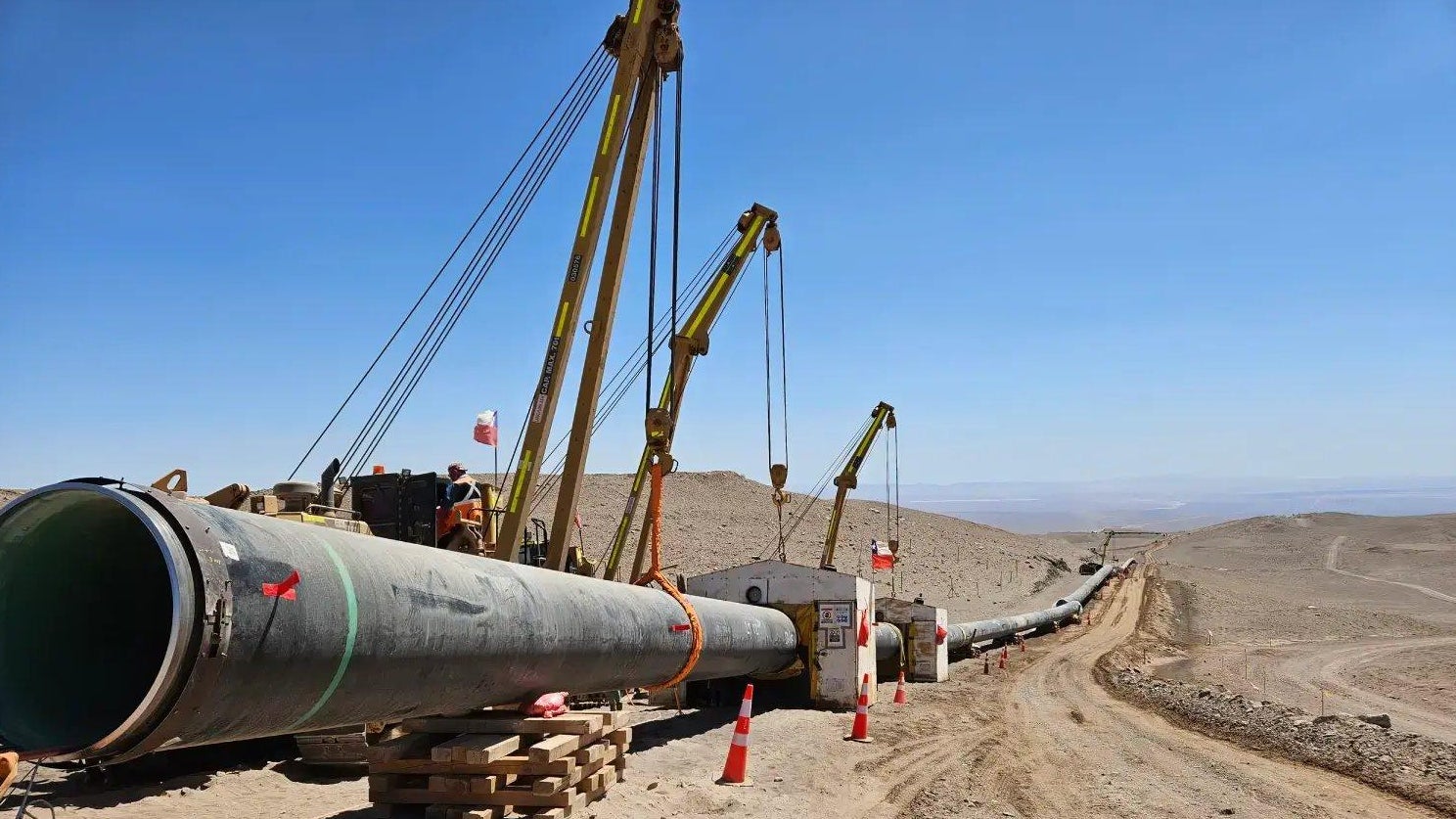
Bringing ocean water up to the top of the Andes. This is the industrial challenge taken on by the Chilean mining company Collahuasi, which exploits one of the largest copper deposits in the world. In northern Chile, in the middle of the Atacama Desert, the company will build a gigantic hydraulic system capable of transporting water from the Pacific coast to its mining facilities, located more than 4 miles away.
400 meters above sea level. A titanic project estimated at 3.5 billion dollars, including around a billion for the construction of the 194 kilometers of pipes and the pumping stations responsible for raising the water of the Pacific to an altitude of 4,400 meters.
Called C20+, this construction should allow the mine to continue its activity for at least 20 additional years, as explained by the Argentine media Uno. The most impressive remains the route that the water must travel: from the Chilean coast, it crosses one of the driest territories in the world before gradually climbing into the Andes mountain range. It all starts in Puerto Patache, on the Pacific coast in northern Chile.
This is where a desalination plant must treat seawater to supply Collahuasi's mining facilities. Developed by the Spanish group Acciona, this installation is designed to produce 1,050 liters of fresh water per second.
Difficult weather conditions But producing this water is only the first difficulty. It still has to be transported to the Ujina mine, located in the Andes. For this, the construction company Techint had to deploy this pipeline almost 200 kilometers long, with a diameter of approximately 1.10 meters.
The pipeline crosses desert landscapes, mountainous areas and particularly difficult to access terrain. Its construction required earthmoving, welding and equipment installation in extreme climatic conditions. The main difficulty is obviously to raise the water from sea level to an altitude close to that of Mont Blanc.
Because unlike a conventional pipeline which transports a liquid over relatively flat terrain, the Collahuasi pipeline must overcome several thousand meters of elevation. To achieve this, Techint built five successive pumping stations, responsible at each stage for providing the pressure necessary for the rise of the water. The system also includes six drainage facilities and a transfer station equipped with a reservoir of approximately 49.
000 cubic meters. The whole must make it possible to transport water to an altitude greater than 4,400 meters, with certain installations being located around 4.
600 meters. At this height, working conditions become particularly difficult. The air contains less oxygen, temperatures can drop as low as -10°C and teams must deal with weather conditions that can slow down operations.
Machine-translated from French
Not cross-checked yet
Only BFM Business reports this story so far. We show it as a single source until another newsroom confirms it.
- BFM Business8 Nov, 13:03
| Publisher BFM Business (established tier) | +76 |
| Detailed summary | +2 |
| Total | 78 |
Method: reports are grouped by the words of their headline and summary; each newsroom counts once; figures are read from the reports as published. Nothing here is written by an AI.