Goldman Sachs CEO David Solomon says the best advice he ever got came from his grandmother in his 20s: ‘Don’t be in a hurry’
Goldman Sachs CEO David Solomon hits the gym before 7 a.m. and lives by his calendar - but says the secret to a long career is patience
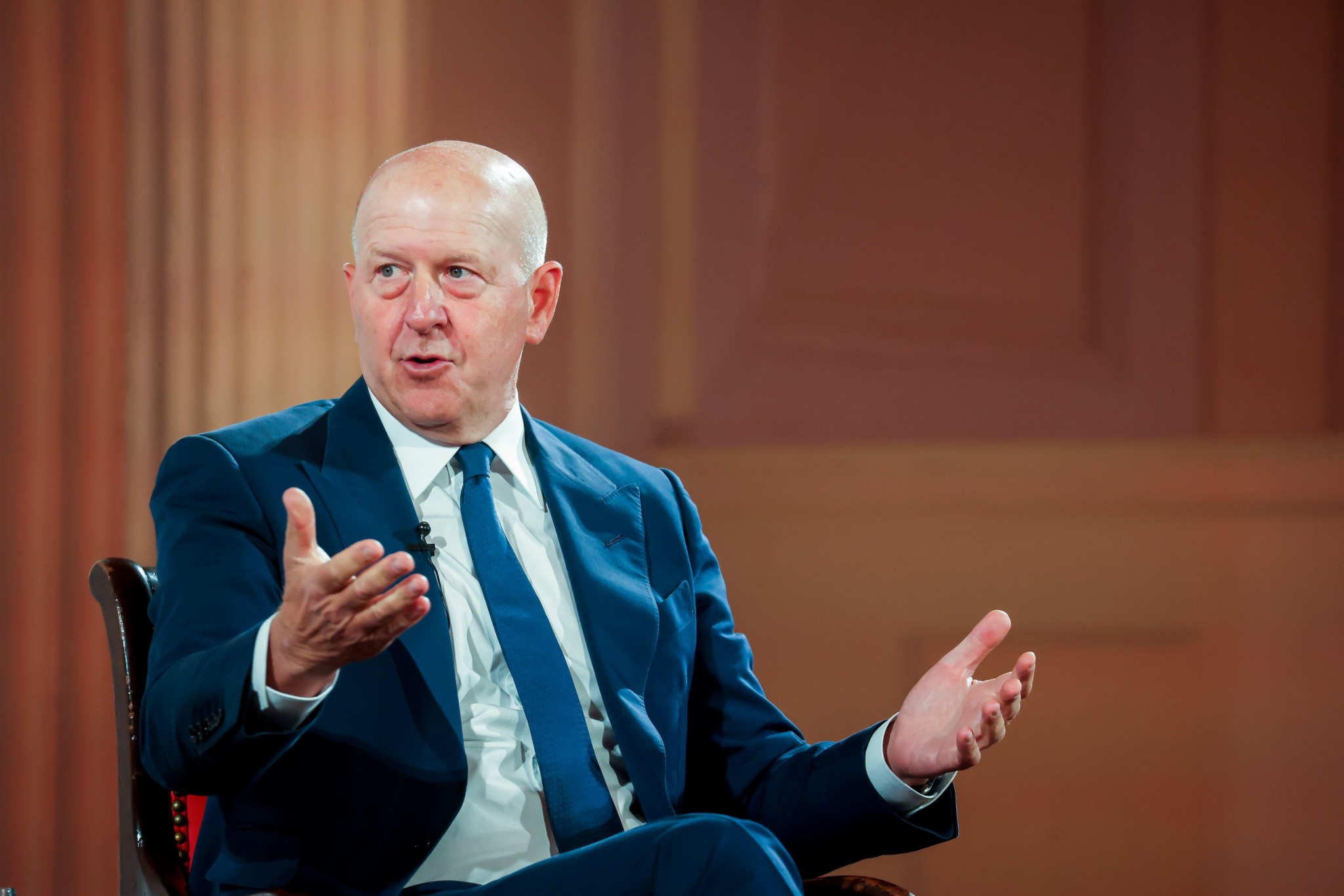
David Solomon runs one of the most powerful banks on Wall Street, but the best career advice he ever received didn’t come from a mentor in a corner office. It came from his grandmother.
“Don’t be in a hurry,” the Goldman Sachs CEO told NBC News’ Christine Romans in a rapid-fire interview about his daily routine and the lessons that have shaped his career. He said she gave him that advice when he was in his twenties.
The clip came out of Romans’ wider conversation with Solomon for NBC’s “Business in America” series. That conversation aired Oct. 23, one day after Goldman launched its Small Business AI Institute , part of a new $500 million commitment to its 10,000 Small Businesses program, with Anthropic, Google, Meta, and OpenAI as partners. In the segment that ran on Nightly News , Solomon said he’s excited about what AI could mean for businesses and for people’s longevity.
In the lightning round, though, he talked less about markets and more about how he manages his days and his life.
Asked to name three things he does before 7 a.m., Solomon kept it simple: He wakes up, goes to the gym, and generally has a cup of coffee and a protein shake.
He’s in good company. An early workout is a fixture of many executives’ routines, from the Bupa CEO who trains six days a week with his Gen Z son to the many leaders featured in Fortune’s Day in the Life of a CEO series.
The research suggests the habit matters more than the hour. A 2022 systematic review published in the Public Health Agency of Canada’s journal Health Promotion and Chronic Disease Prevention in Canada examined 35 studies. Eleven found morning activity more beneficial, 12 found afternoon or evening activity more beneficial, and 12 found no clear difference. The authors concluded there is no consistent evidence that exercising at one time of day is better for your health than another, and they rated the evidence quality as very low.
Solomon’s best trick for keeping his day on track is unglamorous: sticking to his schedule.
“The one thing that we can’t … get back is time,” he said, adding that he tries to be very purposeful with how he spends it. That means making commitments and keeping them, because, as he noted, it’s easy to drift off schedule.
The science backs him up, with a twist. A 2021 meta-analysis in PLOS ONE by Brad Aeon, Aïda Faber, and Alexandra Panaccio found that time management is positively linked to job performance. It was even more strongly linked to well-being, especially life satisfaction. In other words, the payoff from guarding your calendar may show up as much in how you feel as in what you get done.
At first glance, “stick to the schedule” and “don’t be in a hurry” seem to pull in opposite directions. For Solomon, they work on different timelines: Be disciplined with the hours in a day, and be patient with the arc of a career.
Not cross-checked yet
Only Fortune reports this story so far. We show it as a single source until another newsroom confirms it.
- Fortune31 Oct, 11:26
| Publisher Fortune (established tier) | +76 |
| Detailed summary | +2 |
| Total | 78 |
Method: reports are grouped by the words of their headline and summary; each newsroom counts once; figures are read from the reports as published. Nothing here is written by an AI.