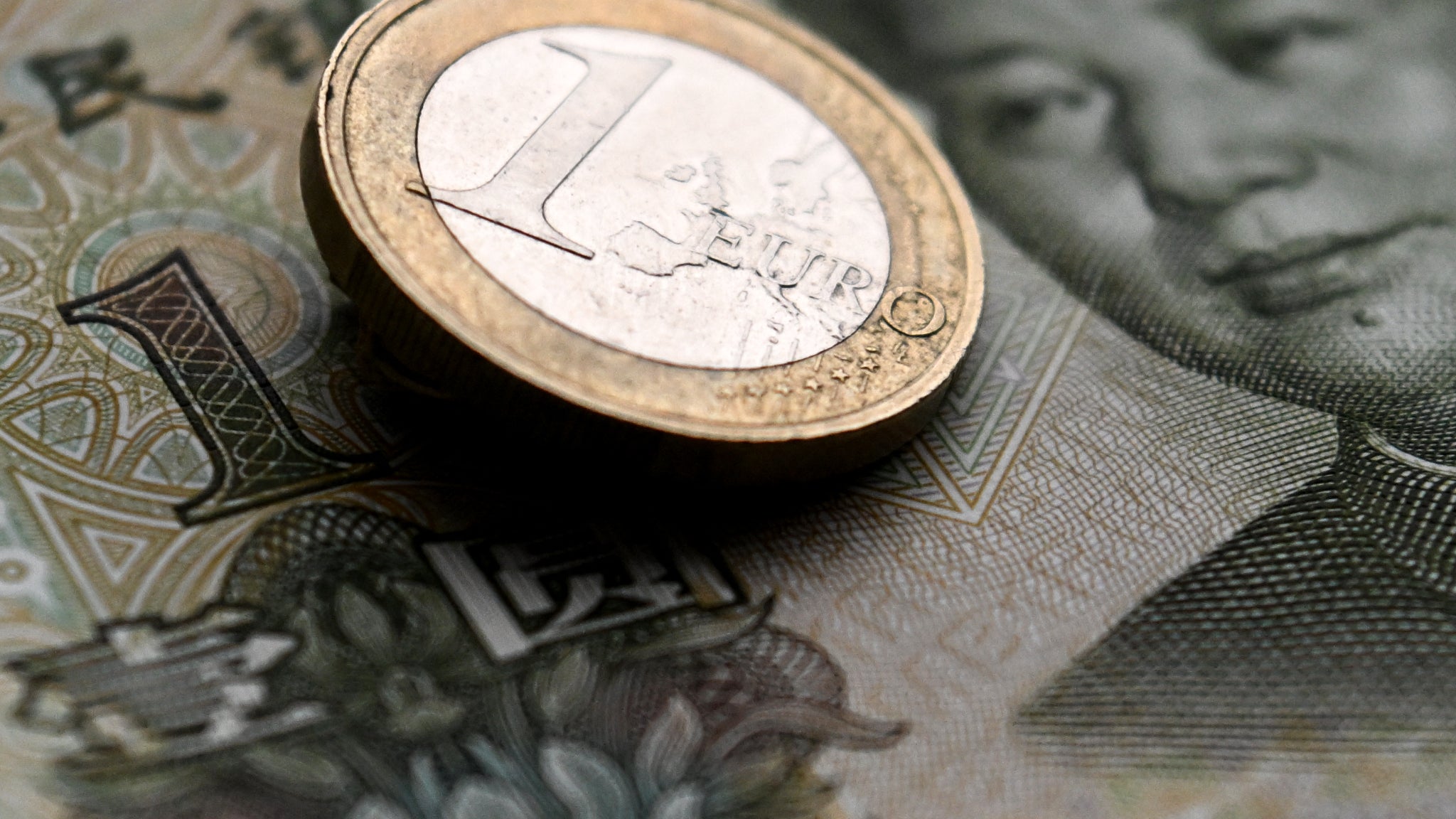
France is already weighing down the euro: the single currency will record its biggest drop in 20 years against the Chinese yuan and European manufacturers are not even benefiting from it
Weighed down in particular by investors' concerns about the French political and budgetary situation, the euro has lost 11% of its value against the yuan since the start of the year and is preparing to record its…
A risk of contagion. Europeans fear a French financial crisis which would contaminate the rest of Europe. In an article published this Thursday, the Spanish daily spoke of "existential risk".
If we cannot yet talk about the French debt crisis (as explained here), political turbulence and the chronic inability to reduce public deficits (or even widen them even further) are already starting to scare away investors. And it is the single currency which suffers. The euro is in fact preparing to record its biggest annual decline against the Chinese currency since 2005, Bloomberg reports this Friday, November 27.
One euro is now worth only 7.31 yuan, compared to around 8.20 at the start of the year, a decline of 11%. Bank of America analysts even tried to quantify the impact of French difficulties on the single currency. According to their estimates, reported by Reuters in early October, each 0.1 percentage point widening in the gap between French and German borrowing rates would be associated with a 0.4% fall in the euro against the dollar.
For investors, the reasoning is as follows: a French financial crisis could weaken European banks, drive up borrowing costs for other states and weigh on growth across the continent. Faced with this risk, they therefore prefer to invest their money in the United States or in other markets considered less risky. However, when an American investor sells European bonds to buy American debt securities, he converts his euros into dollars.
These sales of euros on the foreign exchange market mechanically contribute to lowering the price of the single currency. A trade deficit which jumps by 29% The financial agency therefore identifies two factors which push investors to turn away from the European currency: French political instability and expectations of relatively high interest rates in the United States. At the same time, China's record trade surpluses are supporting the price of the yuan.
This depreciation should, however, be good news for European manufacturers. In theory, a weaker euro makes their products cheaper for Chinese consumers, while it makes goods imported from China more expensive. This is precisely what several European leaders have been calling for for months, starting with German Chancellor Friedrich Merz, who estimates that the yuan is artificially undervalued by up to 30%.
However, despite this favorable evolution of the exchange rate, the trade imbalance between the two blocs continues to worsen. In September, the European trade deficit with China reached 41.7 billion euros according to Eurostat, up 18.5% year-on-year. That's almost 1.4 billion euros in deficit every day.
Over the first 10 months of 2026, it even reached $311 billion, up 29%. How can we explain that European industrialists do not benefit more from the weakness of their currency? Producer prices have increased much less quickly in China than in Europe, explains Adam Wolfe, economist at Absolute Strategy Research, interviewed by Bloomberg.
In other words, what Chinese manufacturers lose in competitiveness with the strengthening of their currency is partly compensated by a more favorable evolution of their production costs. “A further nominal appreciation [of the yuan] will probably not have a significant impact on the trade balance,” estimates the economist. This development is due in particular to Chinese industrial overcapacity, denounced by Donald Trump.
While domestic demand remains penalized by the real estate crisis and weak household consumption, Chinese factories produce more than their domestic market can absorb. This situation fuels intense competition between manufacturers, which compresses prices throughout the production chains, from processed raw materials to electronic components. Chinese manufacturers also benefit from considerable economies of scale and cheaper energy, while their European competitors are bearing the brunt of the new energy shock.
All of these factors contribute to widening the competitiveness gap between the two blocs, regardless of changes in exchange rates.
Machine-translated from French
Not cross-checked yet
Only BFM Business reports this story so far. We show it as a single source until another newsroom confirms it.
- BFM Business27 Nov, 08:40
| Publisher BFM Business (established tier) | +76 |
| Checkable figures cited | +3 |
| Detailed summary | +2 |
| Total | 81 |
Method: reports are grouped by the words of their headline and summary; each newsroom counts once; figures are read from the reports as published. Nothing here is written by an AI.