It supplies 70% of the world's spices and is the leading exporter of rice, but India is thinking bigger: with the free trade agreement with the EU, it now dreams of invading our supermarket shelves.
A country in the spotlight at the Sial in Paris, India is seeking to go beyond its historical role as an exporter of raw materials. Buoyed by the recent free trade agreement with the EU, the world's second largest…
144 companies and “country in the spotlight” status: India’s presence at the International Food Fair (Sial) in Paris did not go unnoticed this year. It illustrates the desire of the world's second largest agricultural producer to change its image and its strategy in order to benefit even more from the growth of global markets, where food demand is increasing but also changing. Gone are the simple commodities that have traditionally made India strong: spices, of which it supplies 70% of global consumption, rice, of which it has been the world's leading exporter since 2012, and shrimp.
Make way for more premium products, such as certain labeled qualities of rice, and above all for more processed products, likely to reach supermarket shelves directly under strong brands, encompassing regional specialties. The issue is clearly explained by the president of the Indian Trade Promotion Organization, Jawed Ashraf, in the pages of the Sial newspaper: increasing the added value of Indian exports captured by their producers. A recent EU-India free trade agreement Several factors favor such a strategy.
The demand for superfoods and gluten-free products is driving sales of carefully marketed spices or rice. The improvement of cold chains in maritime freight makes it more accessible to transport frozen fruits and vegetables - for example mangoes, of which India has hundreds of varieties. Indian processed food exports are already growing at 15% per year.
But the main turning point is very recent: the signing, in January 2026, of a free trade agreement between India and the European Union. It opens the market of the old continent to many Indian products, including processed foods, in particular thanks to a clarification of requirements and health controls. For both parties, this is a major opportunity to increase their trade in goods, which in 2025 exceeded 118 billion euros (11.6% of New Delhi's foreign trade).
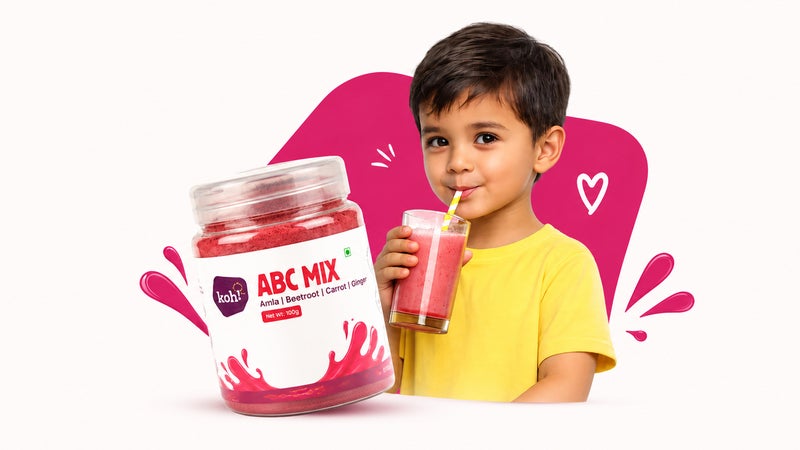
With European players, India is now seeking to “build real partnerships”, underlines Jawed Ashraf. Investing in European supermarkets This is precisely the ambition of young companies like Koh Foods, selected among the Indian start-ups presented at Sial. It offers superfoods grown in India in the form of pure powders that are easy to integrate into cooking to provide nutrients, colors and flavors, already sold in India and Australia.
“We believe that eating healthy should also be a pleasure. Consumers should enjoy eating vegetables,” explains Keerthi Priya Odapalli, founder of Koh Foods. The company focuses in particular on the ease of use of its products to appeal to Western consumers.
“You can mix them with hummus or yogurt. You can use them however you want,” she explains. An offer that is also anchored in local agriculture.
“All our products are purchased directly from farmers, then processed in our factory using an electric dehydration process. We thus ensure that they retain their freshness and flavor,” emphasizes the entrepreneur. “We want to establish ourselves in Europe, in France and across the continent,” explains its co-founder Keerthi Priya Odapalli, currently looking for distributors and even investors.
Machine-translated from French
Not cross-checked yet
Only BFM Business reports this story so far. We show it as a single source until another newsroom confirms it.
- BFM Business26 Oct, 05:57
| Publisher BFM Business (established tier) | +76 |
| Detailed summary | +2 |
| Total | 78 |
Method: reports are grouped by the words of their headline and summary; each newsroom counts once; figures are read from the reports as published. Nothing here is written by an AI.