‘The key is pricing realistically’: how to sell your home in a falling market
From small fixes such as decluttering to taking your property off the market for a break, there are ways to seal the deal Selling your home is always a big task, but when the headlines are telling you prices are…
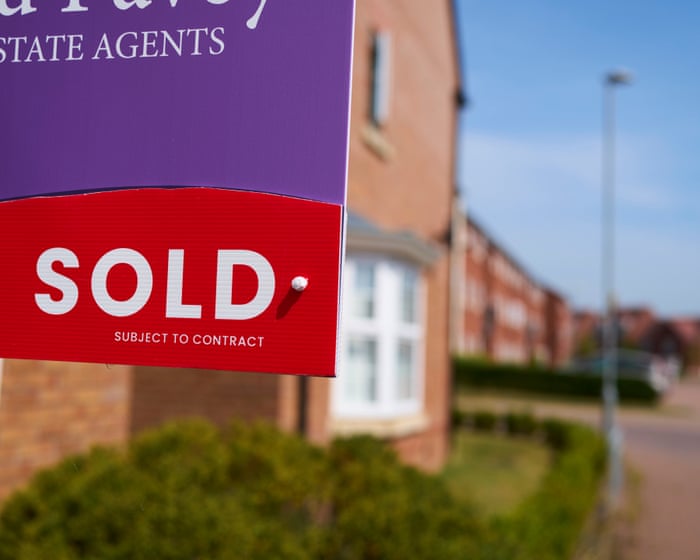
‘The key is pricing realistically’: how to sell your home in a falling market From small fixes such as decluttering to taking your property off the market for a break, there are ways to seal the deal
Selling your home is always a big task, but when the headlines are telling you prices are falling, it can feel even more daunting.
Average house prices in the UK fell by 1.2% over the year to 31 October, according to Lloyds bank – the steepest drop since late 2023.
Plus there are fewer people buying: in September, mortgage approvals for house purchase were down by 19.4% year on year, the most recent official data shows.
So just how worried should sellers be? “It is most certainly getting more difficult to sell a property in the UK,” says Stuart Ducker, the strategic solutions director at the property data company TwentyCi.
Of the homes on market between January and October this year, 53.5% have been sold so far, Ducker says.
“But there are areas of the country – for example, inner London – where the chances of a sale are only 30%.
“In terms of property types, the flats market is not great at the minute: the likelihood of selling a flat nationally is only 41% in 2026 to date.”
House prices in Greater London are down by 3.1% year on year, according to the latest Lloyds data, while south-east and south-west England have recorded falls of 2.4% over the year.
But in some other parts of the UK, prices have been going up, albeit more slowly than before. Northern Ireland, for example, experienced average property values rising by 4.4% in the year to the end of October.
And within regions it is a mixed picture. “Even in some of those more challenging parts of the market, there are still areas where there’s a shortage of stock,” says Emily Williams, the director of research at Savills estate agents.
She adds: “In outer London there’s still decent demand that has not been met by good available stock for family housing. So, if you’ve got a good family house, there are still buyers out there looking.”
Things could be more problematic if you are selling your home in the south of England and buying a new home in a region where prices are still rising, as your buying power may be reduced.
Others who stand to lose out when prices fall are sellers who do not plan to buy another property, or downsizers who are relying on a set amount of equity to fund their retirement, or help family members.
However, for those moving within the same region, a fall might work in their favour.
“What matters is the gap between the home being sold and the home being bought, not the headline price of either,” says Nick Mendes, the technical manager at the mortgage broker John Charcol. “Those trading up are often in the strongest position when prices are softening.”
Whatever your situation and wherever you are in the country, finding a buyer quickly depends on getting the price right.
It is most important to price “realistically” at the outset, Williams says. “Buyers are very savvy. Everyone can look at Rightmove or Zoopla and see what things have sold for previously.”
The trouble is, it can be very difficult to know what the right price is. Typically, a seller might ask three or four estate agents to come and value their home – but they may all come up with different valuations that vary by many thousands of pounds.
As well as checking recently sold properties in your area, on portals such as Rightmove and Zoopla, it is also worth challenging the agents to justify their valuations.
Alex Oppenheim, a director at John D Wood estate agents, says: “Ask the agents to show their recent comparable evidence. Can they show you similar properties that they have actually sold in that price range in the past few months?”
Agents might say they have buyers looking for a property similar to yours, and it is perfectly possible to test the waters.
Oppenheim says: “You can agree for them to market your property to those buyers, without putting it on the portals to begin with, to see if there is any interest. You can even say, ‘If you get a buyer at that figure, I will give you an extra 0.5%’.”
Then, if that doesn’t work, you can think about listing the property for sale with a lower price.
It can be demoralising to have a stream of viewers coming through the door and no offers. It could be easy to think there is something wrong with the property. Perhaps if you repainted, or changed the carpets, or did something with the kitchen, it might help? Oppenheim suggests that is rarely the solution.
But there may be some simple things you can do to make a difference.
Creating a sense of light and space by clearing away clutter and cleaning the windows is always a good idea, as is generally maintaining the property even when you are trying to sell it.
“I would recommend spending on things that fall under the category of maintenance. So if, for example, you have repaired a leak and there is still some evidence of the old damage on the ceiling, you should absolutely get that repainted,” Oppenheim says.
“But you could spend thousands on cosmetic changes, and it will probably make no difference. There is a misconception about problems with properties languishing on the market for a long time without finding a buyer. There is typically nothing wrong with those properties – the only thing that is wrong is the price.”
Sam Molyneux-Summers, the chief operating officer at the estate agents Century 21, says buyers dictate the market.
“We always ask for feedback after viewings, including what people think about the price,” he says. “If we are consistently hearing that people think it is too high, we will suggest lowering it.”
The problem is that lowering it can, in itself, make it harder to sell. Research from Savills, which focused on houses with asking prices above £1m, shows that where a property did not need a price cut, it took about eight weeks to sell. Where there was at least one cut, it took about 13 weeks longer. And if you needed two or more, it took an additional 16 weeks.
“It shows how much it can be drawn out if you don’t get the pricing right at the start,” Williams says. “And these properties often sell at a lower price than might otherwise have been achieved.”
Knocking a few thousand pounds off won’t make a big difference – ideally, a reduction should make your property visible to potential buyers who are searching in a different price range on the portals.
Oppenheim has one piece of advice about reductions, which is that “You have to be bold. Otherwise you risk death by a thousand cuts.”
Another strategy might be to come off the market completely, take a break, and return perhaps three months later to capture a new set of potential buyers. And you may not even need to lower the price for it to be effective.
Ducker says TwentyCi’s data suggests that your chance of a sale if you take a break is similar to that if you reduce the price.
Leaving your home sitting on the market for many months without taking action appears to be the worst thing you can do.
However, patience is a great strength, and as we move into the colder months, those who can take their time would be well advised to do so.
David Hollingworth, at the mortgage broker London & Country, says: “We are coming towards Christmas, so there will naturally be a drop-off in activity anyway”.
Not cross-checked yet
Only The Guardian reports this story so far. We show it as a single source until another newsroom confirms it.
- The Guardian28 Nov, 08:00
| Publisher The Guardian (reference tier) | +82 |
| Detailed summary | +2 |
| Total | 84 |
Method: reports are grouped by the words of their headline and summary; each newsroom counts once; figures are read from the reports as published. Nothing here is written by an AI.