Having stepped down from the management of SNCF Voyagers, Christophe Fanichet takes up the reins at Eurostar to confront future competition
The executive reaches a turning point for the cross‑Channel operator whose monopoly is being challenged by new entrants.
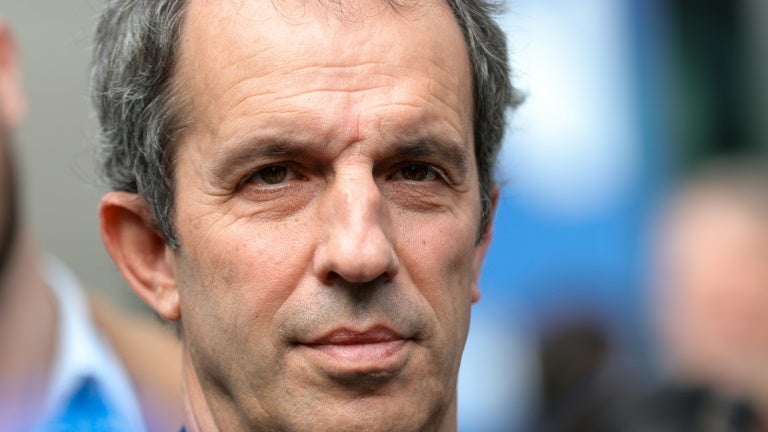
He had been "thanked" from the management of the very powerful subsidiary SNCF Voyageurs (which operates TGV, Intercités and other TER) in the middle of summer by Jean Castex, the new president of the group, Christophe Fanichet remains in the group and finally bounces back at the head of Eurostar, a 51% subsidiary of SNCF Voyageurs, from December 1st. As general manager, he replaces Gwendoline Cazenave. Christophe Fanichet "will bring his vision and experience of high speed and international activities, of the opening to competition of the rail transport markets in France and Europe, as well as performance and innovation, both in industrial fields and in services to travelers", we can read in a press release.
In addition to Paris and London, Eurostar operates a fleet of 51 high-speed trains, serving destinations in Belgium, the Netherlands and Germany, since the integration of Eurostar and Thalys under a single brand. “I am delighted to join the Eurostar Group teams to devote myself to its development. Eurostar is a magnificent company whose talent and commitment of agents serving our customers, the strength of the network across Europe, and the power of being a world reference in travel.
I appreciate the challenge that the new page that opens represents. We will have to deploy the investments and transformations necessary to ensure the growth of Eurostar in a competitive environment", comments Christophe Fanichet. The manager arrives at a turning point for the cross-Channel operator whose monopoly is contested by new players who could start operating in 2030, notably Virgin Trains and Trenitalia (the most advanced) but also "pure players" like Gemini or Heurotrain.
Counter-offensive Christophe Fanichet will therefore have to lead the counter-offensive put in place by Gwendoline Cazenave with the objective of reaching 30 million passengers in 2030 compared to 20 million last year. The operator will launch three new routes for the early 2030s: London–Frankfurt, London–Geneva and Amsterdam/Brussels–Geneva. To support this consolidation, it ordered 30 high-speed trains from Alstom (plus 20 as an option) for an amount of 1.4 to 2 billion euros.
The seat capacity of these two-level trains (a first in the tunnel) will increase by 20%, to 540 seats. When traveling coupled, they will offer approximately 1,080 seats per service.
These new trains will bring the total fleet to 67 trains and should be delivered from 2031. The operator therefore displays a certain serenity, particularly in the face of its future competitors. "It's not yet for now, we're talking at least 2029-2030 in the best case scenario because Trenitalia and Virgin will have to approve their trains and that's a very long time given that these trains cross several countries in addition to the tunnel, we're considering them calmly," the Eurostar spokesperson told BFM Business last March.
Machine-translated from French
Not cross-checked yet
Only BFM Business reports this story so far. We show it as a single source until another newsroom confirms it.
- BFM Business2 Nov, 13:50
| Publisher BFM Business (established tier) | +76 |
| Total | 76 |
Method: reports are grouped by the words of their headline and summary; each newsroom counts once; figures are read from the reports as published. Nothing here is written by an AI.