“The fear of investing remains very deep-rooted among us”: almost one in two French people have postponed a decision concerning their savings or investments over the last 12 months
On the occasion of World Savings Day celebrated on October 31, an XTB study reveals that 44.7% of French people have postponed at least one financial decision mainly due to the fear of losing their money.
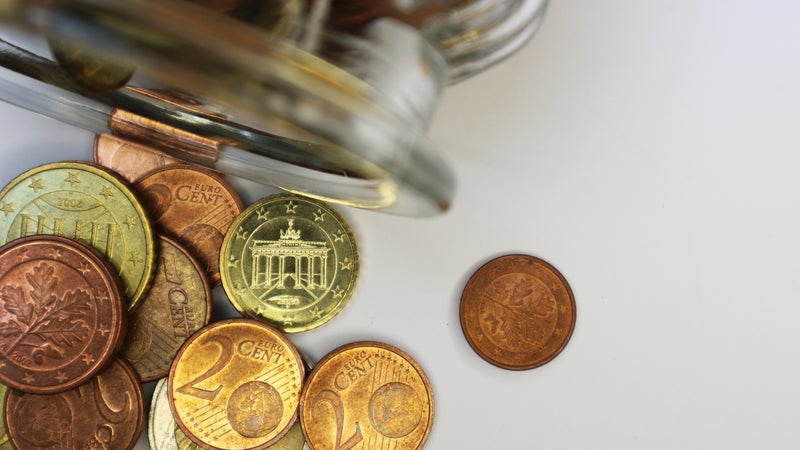
Every October 31 since 1924, World Savings Day has been celebrated to allow everyone to question the management of their finances. On this occasion, the broker XTB unveils a study on the savings decisions of the French. A worrying figure emerges: 44.7% of French people have postponed at least one decision concerning their savings or investment over the last twelve months.
In the current context of economic and political uncertainty, the French are in fact mainly concerned by the decline in their purchasing power, with 80% of respondents citing inflation as one of their "main concerns". If the French are today more cautious about the use of their money, it is mainly because of the "fear" of losing money (52%), before that of making "bad financial choices" (39%), the lack of knowledge about finance (29.2%) before the lack of "available means" (25%). “We lose money by doing nothing” “Give 100 euros more per month to the French: almost half would keep it aside, in a savings account or in their current account, and barely one in eight would invest it.
The fear of investing remains very deep-rooted among us", explains Mathéis Mouflet, market analyst at XTB France. In fact, Livret A and euro funds remain the preferred investments of the French. But they "return today less than inflation.
Their real return is negative: we lose money by doing nothing", recalls the expert. In the very long term, the stock market remains the most profitable investment, he affirms. "Since 1900, stocks in developed countries have returned on average 8.5% per year, even with sharp declines along the way", he specifies.
If caution remains necessary when it comes to making a decision about your money, the broker points out a paradox among a generation: 18-24 year olds. The latter consider that it is "the best time to invest", and at the same time, "they postpone this decision because they have less money". For him, starting to invest early "can change a life, thanks to compound interest, since the gains themselves produce gains."
“Earnings themselves produce gains” “With 100 euros per month from 25 to 65 years old and a return of 8% per year, we obtain around 320,000 euros, for 48,000 euros paid.
And 1,000 euros invested once becomes around 4,700 euros after 20 years, but almost 22.
Machine-translated from French
Not cross-checked yet
Only BFM Business reports this story so far. We show it as a single source until another newsroom confirms it.
- BFM Business31 Oct, 09:29
| Publisher BFM Business (established tier) | +76 |
| Checkable figures cited | +3 |
| Detailed summary | +2 |
| Total | 81 |
Method: reports are grouped by the words of their headline and summary; each newsroom counts once; figures are read from the reports as published. Nothing here is written by an AI.