More than 3% growth, billions of dollars from Russia and an ambassadorial reception unprecedented in 30 years: why 2026 was an exceptionally favorable year for Kim Jong-un's North Korea
Buoyed by rapprochement with Russia and China, a relative economic recovery and several diplomatic successes, North Korea seems to have had a relatively favorable year in 2026. Cyberspace has also established itself as…
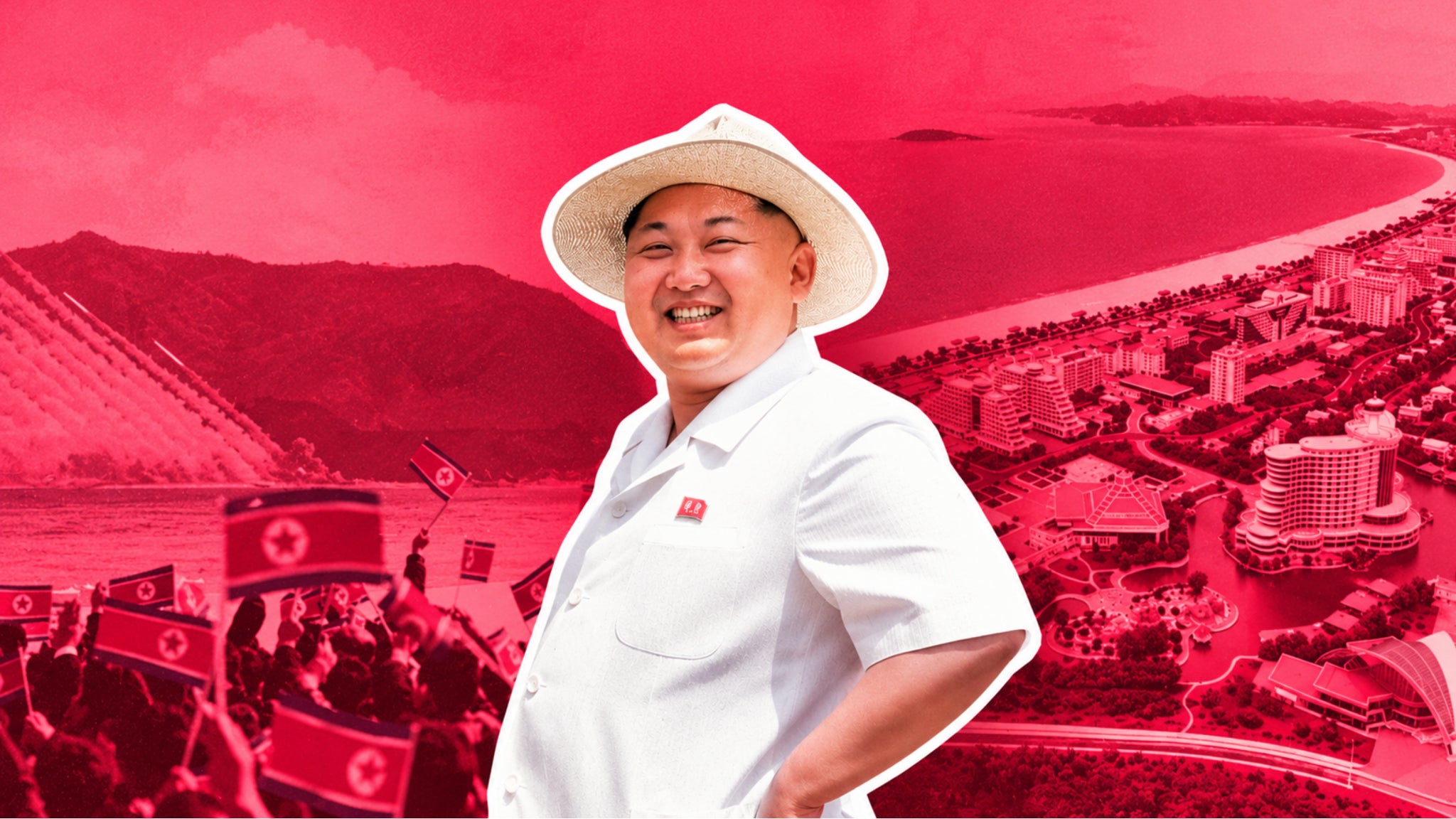
Kim Jong-un has something to smile about. Beyond the usual propaganda images carefully staged by Pyongyang, the North Korean leader, who has ruled the country with an iron fist since 2011, is now benefiting from a particularly favorable situation. On the diplomatic, economic and technological levels, North Korea experienced a year 2026 with results as surprising as they were unexpected, underline several specialists in the country.
An “improvement” which contrasts with the international isolation and chronic difficulties that the regime has faced until now. Far from testifying to a true economic miracle, the latest indicators nevertheless depict a rather favorable situation for Pyongyang. According to estimates from the Bank of Korea (the South Korean central bank), the North Korean economy has returned to annual growth above 3% since 2023, after several years of contraction.
Heavy industry and construction are operating at full capacity, while light industry is showing signs of recovery. Trade with China jumped 16%. This improvement can be explained by several factors.
The first, and undoubtedly the most decisive, is the military rapprochement with Russia. According to estimates from the Institute for National Security Strategy (INSS) in Seoul, arms deliveries to Moscow (including ammunition and missiles) as well as the deployment of North Korean troops would have generated between $11 and $14 billion in revenue for the regime. Considerable financial resources, which offer Kim Jong-un new room for maneuver to support his heavy industry and his technological programs.
Seungho Jung, professor of economics and lecturer at the School of Northeast Asian Studies at Incheon National University, explains to BFM Business that "heavy industry and the construction sector have been the main drivers of this growth, while light industry has also shown signs of recovery in 2025." The regime is thus increasing major projects: construction of 50,000 apartments in Pyongyang, development of vast agricultural greenhouse complexes and the establishment of new factories in the regions.
However, the researcher, a specialist in the subject, is nuanced. At the Ninth Party Congress in February 2026, "North Korea emphasized economic stability and gradual development rather than rapid expansion." This could thus “reflect the persistence of financial and investment constraints despite recent economic growth”, he believes.
Another driver of this economic improvement: the resumption of trade with China. Bilateral trade increased by 16%, to reach $3.1 billion, thanks to the complete reopening of borders after the pandemic. Pyongyang also benefits from Chinese demand for raw materials, particularly tungsten, whose exports constitute an additional source of foreign currency.
Between economic fragilities and return to the diplomatic scene However, this growth remains at two speeds and remains marked by strong structural fragilities: dependence on the Chinese market, maintenance of international sanctions, strong inequalities and inflationary pressures. As Seungho Jung points out, “stronger economic growth does not necessarily mean improved living standards for ordinary North Koreans.” This situation is all the more worrying as the continued depreciation of the North Korean won fuels inflationary tensions and weakens household purchasing power.
This analysis is corroborated by recent observations from the Korea Development Institute (KDI), which highlights that rapprochement with Russia has contributed to an increasingly segmented economy, whose benefits remain largely disconnected from the civilian economy. The persistent dependence on trade with China and the weight of international sanctions also constitute structural obstacles to a lasting recovery. Also on the diplomatic level, Pyongyang recorded several advances during 2026, demonstrating a renewed activity on the international scene.
On June 8 and 9, Xi Jinping's state visit to North Korea, the first by a Chinese president in seven years, marked a rapprochement between the two historic allies. Notably, the issue of denuclearization was not raised publicly during the summit. According to several analysts consulted by BFM Business, this diplomatic omission reflects an evolution in the Chinese position, which now seems to come to terms with the reality of North Korea's nuclear arsenal.
Another sign of this desire to reinvest the diplomatic scene: on November 22, Kim Jong-un personally welcomed 10 new foreign ambassadors, notably those from Russia, India, Brazil, but also Sweden and the Czech Republic, to formalize their taking up functions in Pyongyang. This is the first time in more than 30 years that a North Korean leader has taken part in this diplomatic exercise, until now entrusted to a senior official of the Supreme People's Assembly. By reviving this practice of his grandfather, Kim Il-sung, the North Korean leader intends to assert his status as head of state on the international scene and present North Korea as a country maintaining normal diplomatic relations with the rest of the world.
During this ceremony, he affirmed that his country was seeking "neither supremacy nor expansion", but intended to defend its sovereignty and develop its external relations. However, this diplomatic openness remains entirely relative. Because if Pyongyang multiplies the signals of rapprochement, the regime remains faithful to “its reflexes of confrontation” when its interests are at stake.
This ambivalence was particularly illustrated in its relations with Switzerland. On October 19, Bern reestablished its permanent diplomatic presence in Pyongyang. His Minister of Foreign Affairs, Ignazio Cassis, even officially participated in the reopening of the office at the end of the month, opening a new channel of dialogue with Europe.
But this rapprochement was short-lived. Just weeks after its reopening, Pyongyang ordered the closure of the Swiss diplomatic office, in retaliation for sanctions imposed by Bern against a North Korean camp accused of being involved in the transfer of Ukrainian children from territories occupied by Russia. A brutal reminder of the limits of this openness: the resumption of dialogue does not mean that the regime is ready to change its diplomatic line.
Cyberspace, another financial weapon of Pyongyang There is, however, another date to remember in the North Korean calendar. On October 29, 2026, following a careful social engineering operation, hackers siphoned funds through 10 different blockchains, simultaneously. The toll is dizzying: $6.36 billion in funds affected at the start of the attack, which would make it the largest theft in the history of cryptocurrencies.
Of this sum, 2.7 billion dollars were able to be frozen in time, while 2.4 billion would have been definitively stolen and sheltered by North Korea, out of reach of the authorities. A real coup for a regime already accustomed to navigating the gray zones of cyberspace. Phishing, cyber espionage, fake IT workers infiltrated in large companies around the world: Pyongyang has been increasing operations aimed at stealing funds for several years.
But this time, the scale of the operation marks a new level. “They have just given us a new textbook case of a successful cyber operation. It is both a demonstration of their capabilities and a sign of their need for financing,” estimates Sébastien Garnault, specialist in cybersecurity, artificial intelligence and digital sovereignty issues, with BFM Business.
This heist, which could become the largest in the history of cryptocurrencies, is however firmly denied by Pyongyang, despite accusations made in particular by the FBI and several companies specializing in cybersecurity. For the North Korean regime, these operations represent a particularly valuable source of financing, in a country subject to heavy international sanctions. “It is because they are under sanctions that they are obliged to seek financial levers in this way,” recalls Sébastien Garnault.
While the details of the operation remain to be clarified and several investigations are still underway, this attack demonstrates a technical and operational improvement of North Korean capabilities in cyberspace. “This regime has always sought a guarantee of security which would allow it to do what it wanted. In the 20th century, this guarantee was the nuclear bomb.
In the 21st century, it's artificial intelligence. They understood it well", analyzes Sébastien Garnault. A rise in power which could also...
have military implications. “What was done in the financial world could very well be applied to the world of defense. They have the skills and know-how: they have just demonstrated it to us,” notes another expert on the subject.
So, between these different perspectives, more or less pleasing for the regime, but always carefully staged by Pyongyang, or skillfully concealed, Kim Jong-un has enough to offer himself a few family photos, alongside his wife and daughter, in a ski resort. Well-oiled propaganda, precise smiles: the North Korean leader also knows how to stage happy moments, especially when they serve his image. As the expression goes, "he is very smart who knows when luck...
or the right moment decides to smile at him".
Machine-translated from French
Not cross-checked yet
Only BFM Business reports this story so far. We show it as a single source until another newsroom confirms it.
- BFM Business28 Nov, 13:20
| Publisher BFM Business (established tier) | +76 |
| Detailed summary | +2 |
| Total | 78 |
Method: reports are grouped by the words of their headline and summary; each newsroom counts once; figures are read from the reports as published. Nothing here is written by an AI.