“Anger is not going to disappear for a few extra euros”: Sophie Binet (CGT) maintains pressure on the government to increase the minimum wage by 10%
The general secretary of the CGT warns that the union will not be satisfied with a moderate increase in the minimum wage, as the government plans. He is demanding an increase of 10%, or 150 euros net.
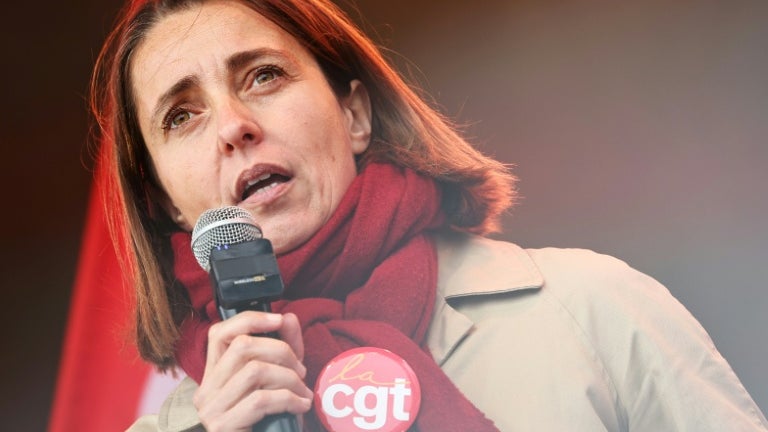
“I am going to tell them that the social conference is not a yellow coin operation,” insisted Sophie Binet, the general secretary of the CGT, on France Inter, before the meeting organized in Matignon with the social partners to try to respond to the social anger expressed for several weeks by the unions and the youth. The government seems open to accepting an increase in the minimum wage on December 1st beyond 1,500 euros net, compared to 1.
477 euros currently, according to information from BFMTV. Insufficient, according to the unions. “On November 5, we passed a milestone, with record strike rates, particularly in the public service.
The anger is not going to disappear because the government will have announced a few additional euros", reacted Sophie Binet. The CGT is demanding an immediate increase in the minimum wage by 10%, or 150 euros net, when the CFDT is demanding an increase of 100 euros net. "We know how to count.
The minimum wage will increase automatically on January 1 by 2.2%, or approximately 18 euros. If the government announces to us just now an increase of 23 euros, that means that its boost is 5 euros. In today's context, it's a kilo of tomatoes or a can of laundry detergent," said the general secretary of the CGT on France Inter.
The government fears job destruction For its part, the government warns of massive job destruction in the event of too significant an increase. “On the amount of the increase in the minimum wage, I will not propose a measure that would harm employment. Bring it to 1.
700 euros net would destroy more than 230,000 jobs. We can increase the minimum wage provided that we do not harm employment,” said Jean-Pierre Farandou, Minister of Labor and Solidarity, in the Tribune Dimanche.
“I think that the increase in the minimum wage is a good thing for the economy. All our neighbors who increased the minimum wage, it had a positive benefit on the economy. Today, we are in recession, because people no longer consume, because wages are too low,” replied Sophie Binet.
For their part, employers' organizations repeat that they cannot support the combination of an increase in wages and a reduction in reductions in employer contributions. The 2026 Social Security finance law provides for reductions, calculated on a less favorable basis in branches whose minimums remain below the minimum wage. An implementing decree could be issued soon but the unions find it ineffective because it leaves too much time for the branches to comply.
Machine-translated from French
Why it is marked verified
2 independent newsrooms report this story. BFM Business published it first, 5 min before the last one.
- BFM Business9 Nov, 09:05
- Le Figaro9 Nov, 09:10
- 150 euros (BFM Business, Le Figaro)
| Publisher BFM Business (established tier) | +76 |
| Checkable figures cited | +3 |
| Detailed summary | +2 |