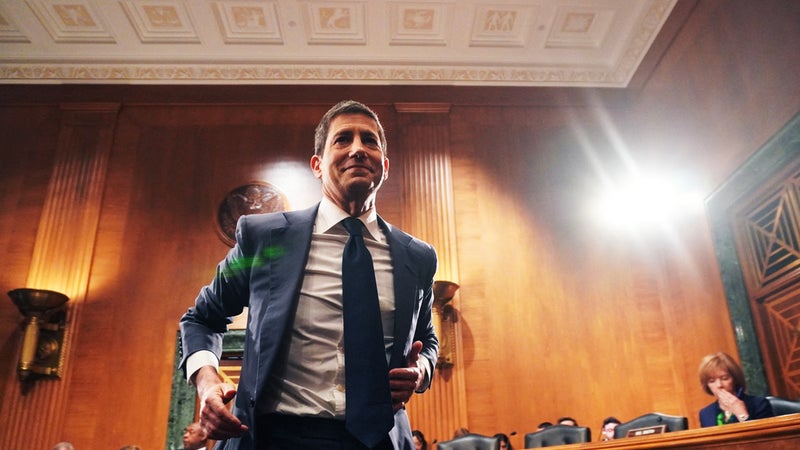
This is a real novelty. The American Federal Reserve (Fed) will make fewer decisions on rates from 2027, the president of the institution, Kevin Warsh, announced on Wednesday, after announcing that the American central bank was keeping its rates at an unchanged level despite persistent inflation. Kevin Warsh, appointed this year by Donald Trump, justified this change in calendar by the desire to devote certain meetings of his committee to monetary strategy in the broad sense.
Concretely, there will be no vote on key rates during one of the eight meetings scheduled for next year. “In 2027, one of the meetings will be solely devoted to monetary policy strategies in the broad sense, without a vote on rates or comment on the envisaged policy. In 2028, we will have two of these meetings devoted to the strategy and six for monetary policy,” detailed Kevin Warsh during a press conference.
“To develop effective policies, it is essential to assess short-term developments in a timely, regular and well-informed manner. But it is equally important that we reserve time and space for strategic deliberations, to rethink the big issues, looking to the long-term future and focusing – as I said – on the long-term aspects,” he continued. The elections "played no role" in the latest decision During his intervention, the head of the Federal Reserve affirmed on Wednesday that the imminence of the mid-term elections in the United States had "played no role" in the status quo on interest rates decided by the monetary institution.
During the two-day Fed meeting, "I didn't hear any reference to politics, to elections, or to what's going to happen in the coming week. I didn't hear anything about that, and I don't think that played any role in the decision, either for me or for my colleagues in the room," Kevin Warsh said at a press conference. However, he judged that inflation was "too high", declared the head of the American Federal Reserve (Fed) Kevin Warsh on Wednesday, presenting the price level as the main economic problem in the United States.
“I do not want and I cannot characterize (financial conditions) as restrictive,” Mr. Warsh also said after the Fed decided to leave its interest rates unchanged.