He wants to "offer households a respite from certain daily costs": in the United Kingdom, Andy Burnham's government unveils its first budget but "the room for maneuver is limited"
British Prime Minister Andy Burnham and his government are unveiling their first budget this Wednesday with several targeted measures to support purchasing power, such as the reduction of certain customs duties or the…
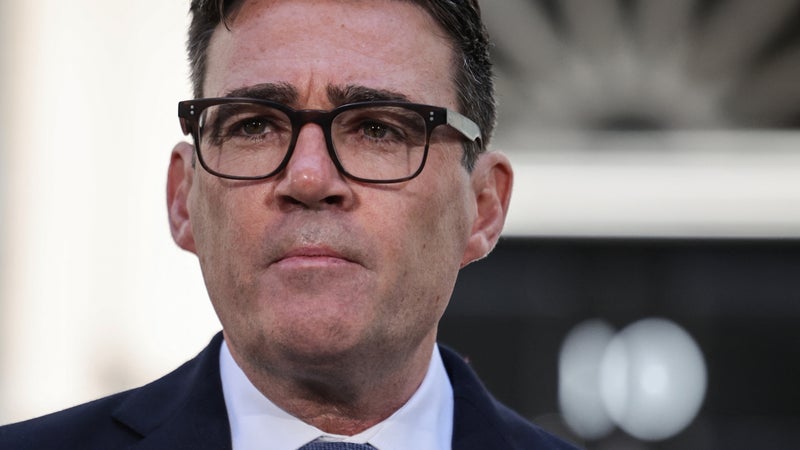
The Labor government of British Prime Minister Andy Burnham must unveil this Wednesday, October 28, a first budget providing for some gestures for purchasing power, its stated priority, despite a margin of maneuver limited by high borrowing rates and its defense commitments. Finance Minister John Healey will present the Executive's plans to MPs at midday. He will seek to reassure the markets while public finances and businesses are suffering the effects of the war in the Middle East, which is fueling high inflation, at 3.5% in September.
In a video message sent on Tuesday, he again pledged to respect "strict budgetary rules" and to ensure "that every pound is well invested". The Labor Party notably promised to eventually cover current expenses with revenues, without resorting to borrowing. “This budget is designed to offer households relief from certain everyday costs, provide targeted support to businesses and the self-employed, and initiate the long-term action needed to sustainably lower energy costs,” he added.
Pickles and chocolate The few measures unveiled on Tuesday are very targeted: reduction of certain customs duties on more than 100 imported products (such as pickles or chocolate), maintenance of tax-free mileage allowances or even extension of parental allowances. The minimum wage should be increased by almost 4%, according to the British media. The government would also prepare new aid to reduce household energy bills, in addition to the abolition of VAT on electricity which came into force in October.
John Healey also promised businesses £800 million in savings through reduced administrative and customs formalities. “The priority must be credibility, which means a budget that clearly follows the fiscal rules, is fully costed and avoids large unfunded giveaways,” says James Wood, professor of political economy at the University of Cambridge. “With a public debt of around 94% of GDP, the room for maneuver is limited,” he notes.
In many countries, rates at which governments borrow are at their highest in decades, amid inflation fueled by soaring energy prices linked to wars in the Middle East and Ukraine. According to the firm Oxford Economics, the safety margin available to the government to respect its budgetary rules has halved since March. The Office for Budget Responsibility (OBR), the body responsible for monitoring public finances, then estimated it at 23.6 billion pounds.
Machine-translated from French
Not cross-checked yet
Only BFM Business reports this story so far. We show it as a single source until another newsroom confirms it.
- BFM Business28 Oct, 06:10
| Publisher BFM Business (established tier) | +76 |
| Detailed summary | +2 |
| Total | 78 |
Method: reports are grouped by the words of their headline and summary; each newsroom counts once; figures are read from the reports as published. Nothing here is written by an AI.