Exclude large farms or retirees, favor small farms and young people? The 27 EU countries are negotiating to define the contours of the new Common Agricultural Policy
After an “extremely trying” summer, the French Minister of Agriculture, Annie Genevard, believes that the negotiations around the future Common Agricultural Policy are “fundamental to restore prospects for the future”.
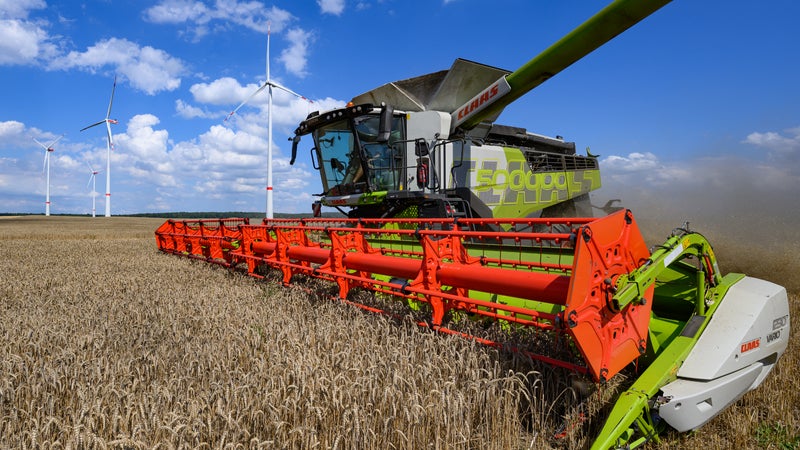
The European Ministers of Agriculture, meeting Monday and Tuesday in Luxembourg, will try to find an agreement on the future Common Agricultural Policy (CAP), while waiting for the 27 to agree on the budget of the European Union. At the heart of the discussions, the post-2027 CAP reform, which will coincide with the new multiannual EU budget (2028-2034). Ministers from the 27 EU states must adopt a common position, then will have to negotiate with the European Parliament for the reform to be adopted.
After an "extremely trying" summer for farmers, "this moment of CAP negotiation is fundamental to restore confidence and to restore future prospects, particularly to the younger generations", stressed French Minister Annie Genevard upon her arrival. “It is essential that we reach an overall agreement, and this is our ambition, to bring stability to farmers in Europe,” added his Irish colleague Martin Heydon, whose country holds the rotating presidency of the EU. Negotiations on the EU budget Among the points that remain to be decided, the definition of “active” farmers, those eligible for European aid.
Some countries are calling for including retired farmers, while others, including France, want to reserve aid for working people. The European Commission has proposed a solution of allowing member states to integrate retirees if they wish. Some also want to take advantage of this to reduce aid to owners of large farms and other investors, for the benefit of small farms and young people entering the profession.
These discussions are taking place in parallel with negotiations on the European budget, which will determine the sums allocated to the CAP, and which EU officials hope to conclude by the end of the year. At this stage, funding for the CAP is still planned at around 300 billion euros, below the 387 billion for the previous CAP. The Commission explains that other funds will be made available to States to help the rural sector, and its President Ursula Von der Leyen has promised to release 45 billion euros in advance from 2028 to support the agricultural sector.
But several so-called "frugal" states, led by Germany, want to significantly reduce the EU budget, by cutting back on traditional policies including the CAP.
Machine-translated from French
Not cross-checked yet
Only BFM Business reports this story so far. We show it as a single source until another newsroom confirms it.
- BFM Business26 Oct, 10:52
| Publisher BFM Business (established tier) | +76 |
| Detailed summary | +2 |
| Total | 78 |
Method: reports are grouped by the words of their headline and summary; each newsroom counts once; figures are read from the reports as published. Nothing here is written by an AI.