France 2030: Emmanuel Macron’s big plan facing a “budgetary wall”, warns the Court of Auditors
Launched “without sufficient thought” in 2021 and deployed very quickly, the future plan is starting to come up against strong financial constraints. Many investments have been decided, but there may be a lack of…
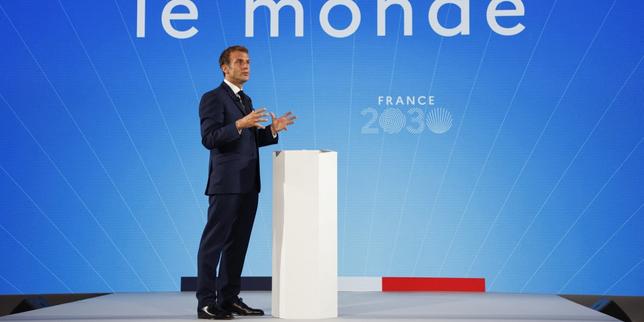
France’s flagship social‑investment scheme, the France 2030 plan, was unveiled in 2021 with the promise of a new era of public and private collaboration aimed at boosting innovation, green energy and modernisation of key sectors. Conceived as a rallying point for the Macron administration, the plan was rolled out with rapidity and enthusiasm, but critics have long argued that it was launched “without sufficient thought”, without fully mapping the fiscal shadow it would cast over the coming decade.
The latest assessment from the Court of Auditors (Cour des comptes) confirms those concerns. In a sharp warning, the auditors described the plan as facing a “budgetary wall” – a point in fiscal space where the projected costs of the programme begin to outstrip the government's ability to finance them without compromising other commitments. They argue that a large panel of investments has already been scheduled, yet the financial underpinning appears thin, raising the risk of a shortfall as the programme unfolds.
The auditors' finding comes against a backdrop of an ambitious investment programme that includes high‑profile initiatives such as hydrogen production, digital revitalisation and housing upgrades. While the government's declaration of commitment helps attract private capital, the auditors question whether the fiscal scaffolding — namely a coherent mix of public spending, tax instruments and borrowing constraints — has been sufficiently engineered to support the scale of those commitments.
The stakes for France’s economy are significant. A potential funding gap could slow momentum in key sectors, dampen business confidence, and stretch the budget beyond the elasticity that French public finances can comfortably absorb. In the broader European context, such a scenario could also affect France’s standing as a proactive “green” champion and its relative attractiveness to investors in a post‑pandemic recovery landscape.
Looking ahead, policymakers will need to decide whether to recalibrate the France 2030 blueprint, redefine some of its flagship projects, or seek new sources of public revenue. The French finance ministry is expected to respond in the upcoming budget reviews, while private finance actors will watch for any signalling of additional fiscal room or a potential shift in risk allocation. The next months will also be crucial for monitoring how the plan’s early phases perform against the auditors’ warnings, and whether adjustments will keep the programme on schedule without triggering a deeper fiscal imbalance.
In sum, the Court of Auditors’ critique underscores a greater issue that has plagued many large‑scale policy initiatives: the tension between bold vision and practical financing. France’s trajectory will hinge on how the government balances the ambition of France 2030 with fiscal prudence, ensuring that the plan’s potential for innovation does not become hampered by an unwritten “budgetary wall”.
Machine-translated from French
Not cross-checked yet
Only Le Monde reports this story so far. We show it as a single source until another newsroom confirms it.
- Le Monde27 Oct, 20:00
| Publisher Le Monde (reference tier) | +82 |
| Detailed summary | +2 |
| Total | 84 |
Method: reports are grouped by the words of their headline and summary; each newsroom counts once; figures are read from the reports as published. Nothing here is written by an AI.