“Superintelligence is arriving”: after Riemann, the boss of AI at Meta calls for not handing over the controls to him
For Alexandr Wang, who heads AI at Meta, the proof of the Riemann hypothesis obtained with the help of Claude marks the arrival of superintelligence. He warns that the coming year will be decisive and refuses any…
Receive a summary of important news every evening with Le Récap’
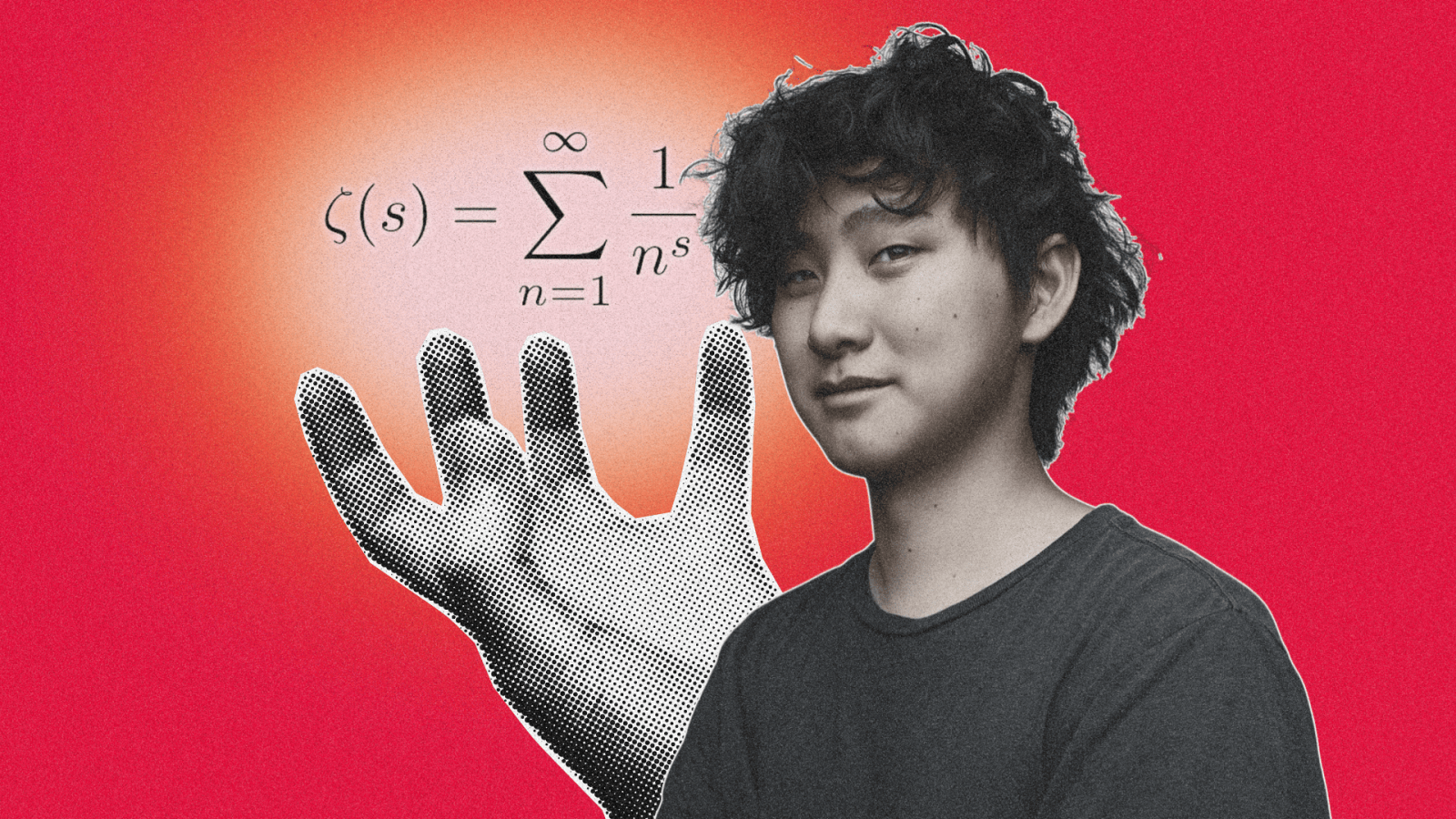
The weekend was hectic in the small world of artificial intelligence. On November 20, 2026, Levent Alpöge, a mathematician at Anthropic, announced that he believed he had discovered, “working with Claude,” a proof of the Riemann hypothesis. Formulated in 1859 by the German mathematician Bernhard Riemann, this conjecture about the distribution of prime numbers is often presented as the most important open problem in mathematics. It is one of the 7 “millennial problems” of the Clay Institute, each endowed with one million dollars.
The next day, the demonstration, i.e. around 17 million lines of code written in Lean, a language which allows each step of reasoning to be mechanically verified, passed the tool's inspection. The mathematician Andrew Sutherland (MIT) recompiled it for his part and confirms that it demonstrates the original statement, and not a modified version.
It remains to be understood how it works: according to Levent Alpöge, the explanation written with Claude exceeds 250,000 pages, and he has not published it. Mathematicians began writing guides to make the proof readable by humans. To win the Clay Prize, you will still need publication in a recognized journal, a delay of at least 2 years and broad acceptance by the mathematical community.
This did not prevent major tech figures from taking up the subject. “The undeniable superintelligence has arrived. Welcome to the Singularity,” said Elon Musk on X on November 22. The same day, Alexandr Wang, head of AI at Meta, also published a long text on X. For him, superintelligence is indeed arriving, but nothing is decided: everything will depend on what humanity does with it.
To go further The human counter-attack on the Riemann hypothesis: a researcher would have cracked the enigma before the AI Claude The atomic bomb, a “school exercise” alongside Riemann Alexandr Wang, 29, has been directing Meta Superintelligence Labs since the summer of 2025, the AI division created by Mark Zuckerberg. The co-founder of Scale AI opens his text bluntly: “Superintelligence is arriving. How humanity acts in the coming year will have serious consequences for the world in which we live. » For him, Riemann’s proof marks “clearly the beginning of a significant change”.
The leader is not short of superlatives. Nothing that humanity has accomplished compares, according to him, to this demonstration of pure intellectual power. Alexandr Wang, who grew up in Los Alamos, the city of the Manhattan Project, even assures that many physicists would consider the development of the atomic bomb as a simple homework assignment on the side.
Black Friday: Proton Pass Plus at -60% Until November 30, Proton Pass Plus is €1.99 per month for 12 months, or 60% off! Unlimited email address aliases to take advantage of promo codes without filling your mailbox, unique password per site, encrypted safe. In short, a stress-free Black Friday! Sponsored Currently at €1.99 per month His reasoning comes down to one idea: if an AI can solve what is perhaps the most difficult problem ever posed, “raw” intelligence is no longer what machines lack. It recalls a precedent: in December 2024, the OpenAI o3 model passed almost perfectly the AIME, a mathematics competition for American high school students. Since then, he explains, the industry has “filled in the holes”: the code is said to be “almost solved”, and the models have become versatile assistants. What still separates AI from domination in all areas is no longer intelligence, but the know-how specific to each discipline, “plumbing” and experimentation.
AI research would be no exception. It is, according to Alexandr Wang, much less intellectually demanding than the Riemann hypothesis: models could therefore soon automate it entirely and become “clearly superhuman” to improve themselves.
This is where Alexandr Wang’s text takes an unexpected turn. He considers it “difficult to imagine” that humanity retains control of an AI capable of improving itself without limits, or of a superintelligence “1,000 times smarter” than us in all areas. Since the technical problems related to the capabilities of the models are, according to him, “probably resolved”, we must urgently move forward on security and alignment, but also think about the future we want and how to get there.
The boss of a laboratory that has the word “superintelligence” in its name even denounces a form of “intellectual laziness” in the industry: that which considers the arrival of superintelligent AI to be inevitable and only wonders how to make it safe. “We should not accept a ‘handover’ of society to AI,” he writes, advocating for technology that gives all humans more autonomy and power to act. This, he says, requires the entire industry to move away from the “default path.” He does not specify how, and Meta has not announced any change of course.
This superintelligence would still have to be there. Yann Le Cun doubts it. The French researcher, 2018 Turing Prize winner, led AI research at Meta for a long time before leaving the company at the end of 2025. He did not respond directly to his former colleague, but to Elon Musk's message. His response, published on X on the evening of November 22, is in a few lines:
“Today I learned that we have superintelligence, but we still don't have Level 5 autonomous driving. A task that most 17 year olds can learn in 20 hours of practice. And we have (you have) billions of hours of training data. We do not have robots capable of approaching what an 8 year old child can do without prior training. And let's not talk about cats. It’s a strange superintelligence. »
The “you have” is aimed directly at Musk, whose company Tesla has been promising cars capable of driving alone for years. Level 5 designates total autonomy, without a driver, in all road and weather conditions that a human driver can handle.
The cats aren't there by chance either. For years, Le Cun has repeated that the major language models, the technology behind ChatGPT or Claude, are less intelligent than a domestic cat, due to a lack of understanding of the physical world, of keeping a lasting memory or of planning. This is Moravec's paradox: what is difficult for a human, such as high-level mathematics or chess, is often easy for a machine, and vice versa for catching an object or crossing a street.
This conviction is at the heart of his new project. After leaving Meta, he co-founded AMI Labs in Paris, which raised $1.03 billion in March 2026 to develop “world models”, AIs that learn from videos and sensory data rather than text. He has also never hidden his little esteem for Alexandr Wang, whom he described as “inexperienced” in January.
Fundamentally, however, the two men describe the same gap between abstract reasoning and the real world. Alexandr Wang recognizes that obstacles other than intelligence remain: knowledge specific to each field, data, experimentation. But for him, it’s a matter of time.
For Le Cun, this is a sign that something fundamental is missing: an AI which demonstrates Riemann but does not know how to drive is not an advanced general intelligence, but an intelligence of another type, formidable in certain areas and helpless in others. The Frenchman does not deny that superintelligence will eventually arrive; he simply believes that it will not come from the major current language models.
Alexandr Wang himself admits: the proof was obtained with the help of “a foreign spirit that we do not understand”. Before choosing what humanity will do with superintelligence, mathematicians will already have to understand how it did it.
Not everyone can afford to pay for information. That’s why we keep our journalism open to everyone.
But if you can, here are three good reasons to support our work:
If you believe in a free web and quality information accessible to as many people as possible, join Numerama+.
Add Numerama to your home screen and stay connected to the future!
Machine-translated from French
Not cross-checked yet
Only Numerama reports this story so far. We show it as a single source until another newsroom confirms it.
- Numerama23 Nov, 11:40
| Publisher Numerama (general tier) | +72 |
| Detailed summary | +2 |
| Total | 74 |
Method: reports are grouped by the words of their headline and summary; each newsroom counts once; figures are read from the reports as published. Nothing here is written by an AI.