Nvidia without Jensen Huang? The succession puzzle
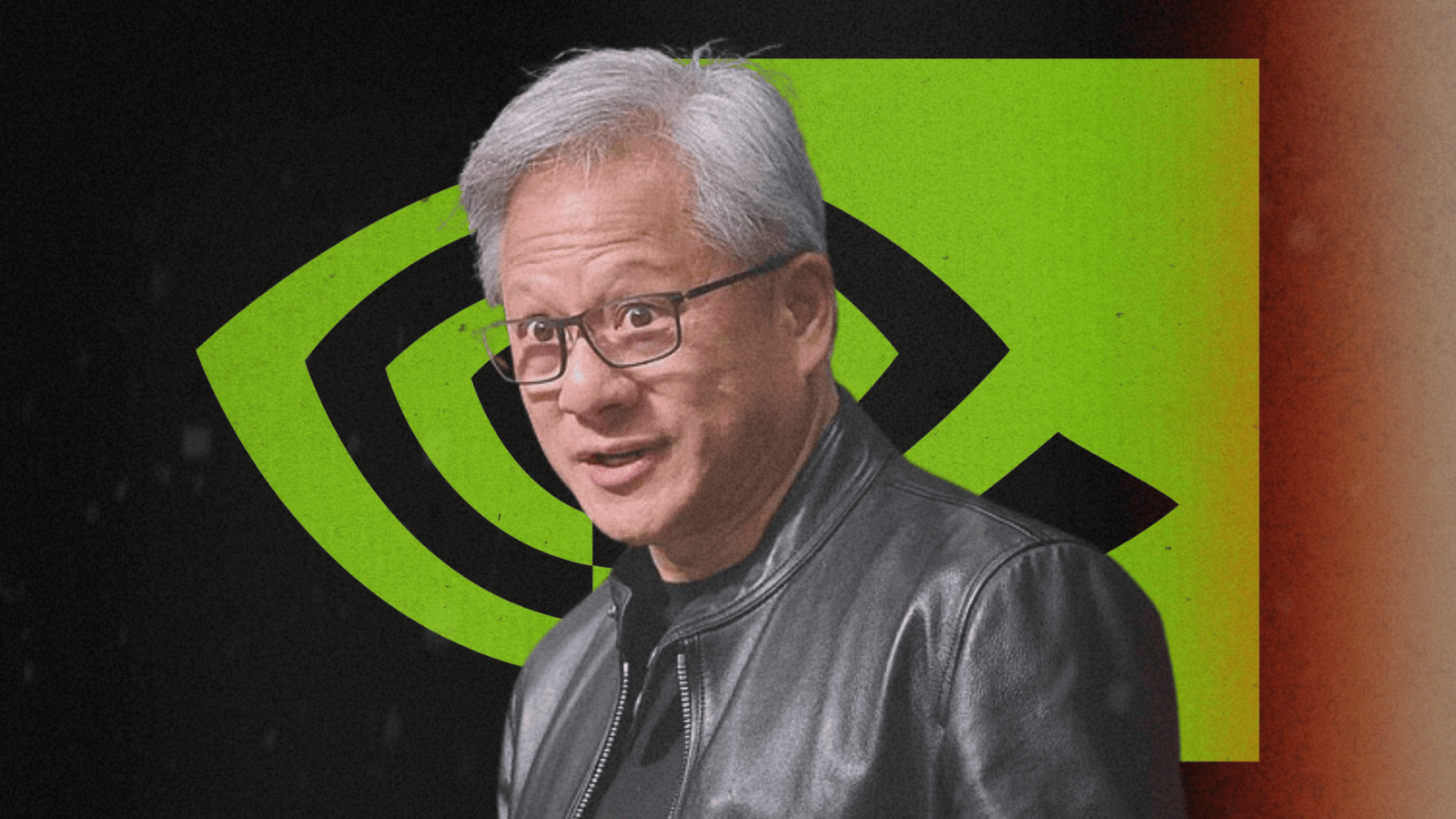
According to the Wall Street Journal, Nvidia's board of directors is preparing to oust Jensen Huang, its co-founder and boss for 33 years. But who to replace him? The most strategic company in AI has not named a…
Receive a summary of important news every evening with Le Récap’
In a message sent to Nvidia employees on November 8, Jensen Huang admitted to having been unfaithful to his wife. The relationship poses a much more serious problem than a private matter: according to the New York Times, American intelligence services suspect this woman, Alice Huang, manager of Megaspeed, a Singaporean company client of Nvidia, of being a Chinese spy.
The same day, the board of directors opened an independent investigation. He says he has no reason to believe that company secrets have leaked and says he has “confidence in Jensen and his management team.”
Three days later, the New York Times revealed a second relationship: Jensen Huang allegedly had an affair with Kimberly Powell, vice-president of health at Nvidia, under his authority. In the process, the Wall Street Journal claims that the council is preparing to oust him. The directors met Wednesday evening, US time. As of Thursday morning, no decision had been announced, but the co-founder's future in the company appears increasingly uncertain.
A company built around one man Replacing a manager is always tricky. At Nvidia, it's a real headache, because the organization was designed so that everything goes through Jensen Huang. The co-founder has set up a very “flat” structure: around sixty managers report directly to him, and he is at the heart of most decisions. Nvidia does not have a chief operating officer, the position that often plays the No. 2 role, and no successor has been named.
Even the board of directors works differently. It does not have a president: Jensen Huang sets the agenda for the meetings with the lead independent director, Stephen Neal, and it is management which prepares the information transmitted to the directors. For Jo-Ellen Pozner, professor of management at Santa Clara University, this model ended up preventing the emergence of potential successors.
Added to this is the flair of Jensen Huang. In 2006, with CUDA, it made it possible to use graphics cards for calculation. A few years later, AI researchers used it to train their models. That bet helped make Nvidia the dominant supplier of AI chips. For many, it's not just a matter of luck: Jensen Huang is "the person who consistently identified where IT was going," Shay Boloor, strategist at Futurum Equities, told Reuters.
Nvidia has not named anyone. But two names come up among the analysts and investors interviewed.
Colette Kress, the emergency solution. Financial director since 2013, previously with Microsoft, Cisco and Texas Instruments, she accompanies Jensen Huang at each results presentation. She is known to the markets, which makes her the natural candidate for a temporary job. According to Semafor, cited by Reuters, some directors would be in favor of his appointment as interim CEO. Its weak point: a financial profile, when Nvidia’s advantage rests on its technology.
Ian Buck, the long-term candidate. Joining Nvidia in 2004 after a doctorate at Stanford, he led the development of CUDA, the software that makes developers dependent on Nvidia chips. Today he manages products for large cloud and AI customers. For Shay Boloor, he is “the strongest internal candidate in the long term”. It is also the favorite of the prediction markets, ahead of Colette Kress, even if volumes are low.
Several analysts imagine a compromise: temporary co-management, with Colette Kress to stabilize finances and Ian Buck to manage technology and products.
The advice is not limited to these names. According to Bloomberg, he is working with an outside firm to identify potential replacements. Jensen Huang's two children, executives at Nvidia, were also cited in the speculation. Johny Srouji, the boss of the Apple Silicon division, also appears to be a possibility.
Investors have already reacted. On Wednesday, Nvidia shares lost 8.6% after the close on Wall Street. Over the week, the company lost around $600 billion in stock market value.
Not all analysts are so alarmist. Nvidia's CUDA software ecosystem, developer community and hardware platform would remain in place under a new CEO. The real question is elsewhere: who will be able, like Jensen Huang, to decide on the next technological bet and convince the entire industry to follow it?
The next few days will be decisive. Nvidia presents its quarterly results on November 17, and will undoubtedly have to explain the future of its management. The next day, three committee chairmen of the House of Representatives wanted to hear Jensen Huang behind closed doors about his links with Alice Huang.
Not everyone can afford to pay for information. That’s why we keep our journalism open to everyone.
But if you can, here are three good reasons to support our work:
If you believe in a free web and quality information accessible to as many people as possible, join Numerama+.
Add Numerama to your home screen and stay connected to the future!
Machine-translated from French
Not cross-checked yet
Only Numerama reports this story so far. We show it as a single source until another newsroom confirms it.
- Numerama12 Nov, 11:50Nvidia without Jensen Huang? The succession puzzle ↗Figures: 33 ans
| Publisher Numerama (general tier) | +72 |
| Detailed summary | +2 |
| Total | 74 |
Method: reports are grouped by the words of their headline and summary; each newsroom counts once; figures are read from the reports as published. Nothing here is written by an AI.