Interest rates unlikely to reach 4.75% by next summer, say City economists
Experts say Bank of England unlikely to increase rates by full percentage point – and could lower them by end of 2027 Financial markets are wrong to predict the Bank of England will raise UK interest rates by a full…
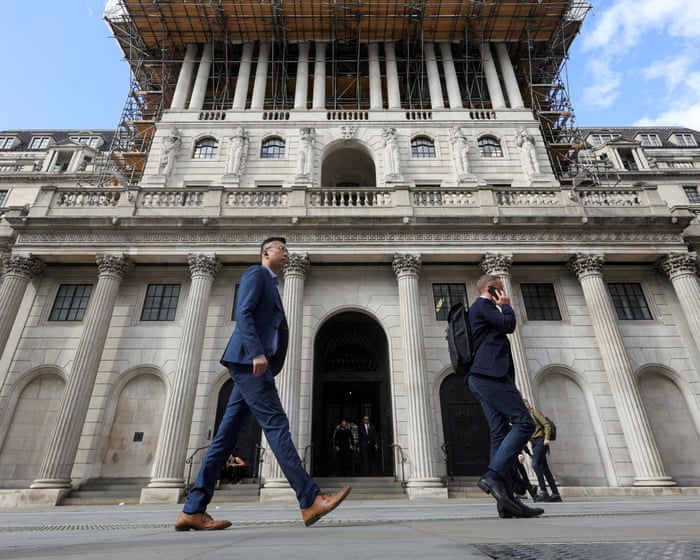
Interest rates unlikely to reach 4.75% by next summer, say City economists Experts say Bank of England unlikely to increase rates by full percentage point – and could lower them by end of 2027
Financial markets are wrong to predict the Bank of England will raise UK interest rates by a full percentage point or more by next summer, City economists believe.
According to market-implied interest rate expectations, the Bank is likely to raise interest rates at least four times over the next year, lifting the bank rate from 3.75% today to 4.75% by the end of July, and possibly to 5% – meaning five rises – by December 2027.
But a number of City experts believe such a sharp tightening cycle is unlikely, given there is little sign that the rise in energy costs is pushing up other prices sharply.
“If you look at the swaps market, and you look at what’s priced in for the Bank of England, you’ve got four rate hikes and then no cuts ever. And I think you’d be hard-pressed to find anybody that really agrees with that,” said James Smith, a developed markets economist at the Dutch bank ING.
“By next spring, I think they [the Bank] could be sounding the all clear, and by the end of next year they could be cutting rates again,” Smith told a briefing in the City last week.
Market-implied interest rates are calculated from the prices of a range of financial instruments, including derivatives such as “swaps”, to establish where traders think interest rates will be in future.
Economists cite several reasons why market-implied interest rates expectations are high. One is that these expectations have been closely correlated with oil prices since the Iran war began.
The higher oil prices have risen, the more rate increases have been priced in. An investor could be right that interest rates won’t rise as far as markets think, but if oil prices keep increasing in the meantime, they would face mark-to-market losses and potentially margin calls.
“It can get pretty painful, so a lot of traders are quite reluctant to take this risk until there’s greater certainty about energy supply and the extent of inflation this winter,” said Smith.
Many traders got burnt at the start of the current Middle East crisis, when most were positioned for further rate cuts this year, he said.
Sanjay Raja, the chief UK economist at Deutsche Bank, also doubts that the Bank will raise rates as fast as the market pricing suggests.
“I do not believe that any mainstream forecaster thinks the Bank of England will hike to 5% by the end of next year with the information set we have today,” Raja said. “It’s not to say it won’t happen. But based on current projections, it seems less likely.”
Not cross-checked yet
Only The Guardian reports this story so far. We show it as a single source until another newsroom confirms it.
- The Guardian25 Oct, 13:00
| Publisher The Guardian (reference tier) | +82 |
| Detailed summary | +2 |
| Total | 84 |
Method: reports are grouped by the words of their headline and summary; each newsroom counts once; figures are read from the reports as published. Nothing here is written by an AI.