Trump no longer just wants to curb Chinese imports to the United States: unable to make Beijing bend, he is putting pressure on Europe and the world to do the same
By threatening 14 trading partners with new customs duties, Washington is increasing pressure on Beijing and intends to curb Chinese influence on world trade, at the risk of reviving international trade tensions.
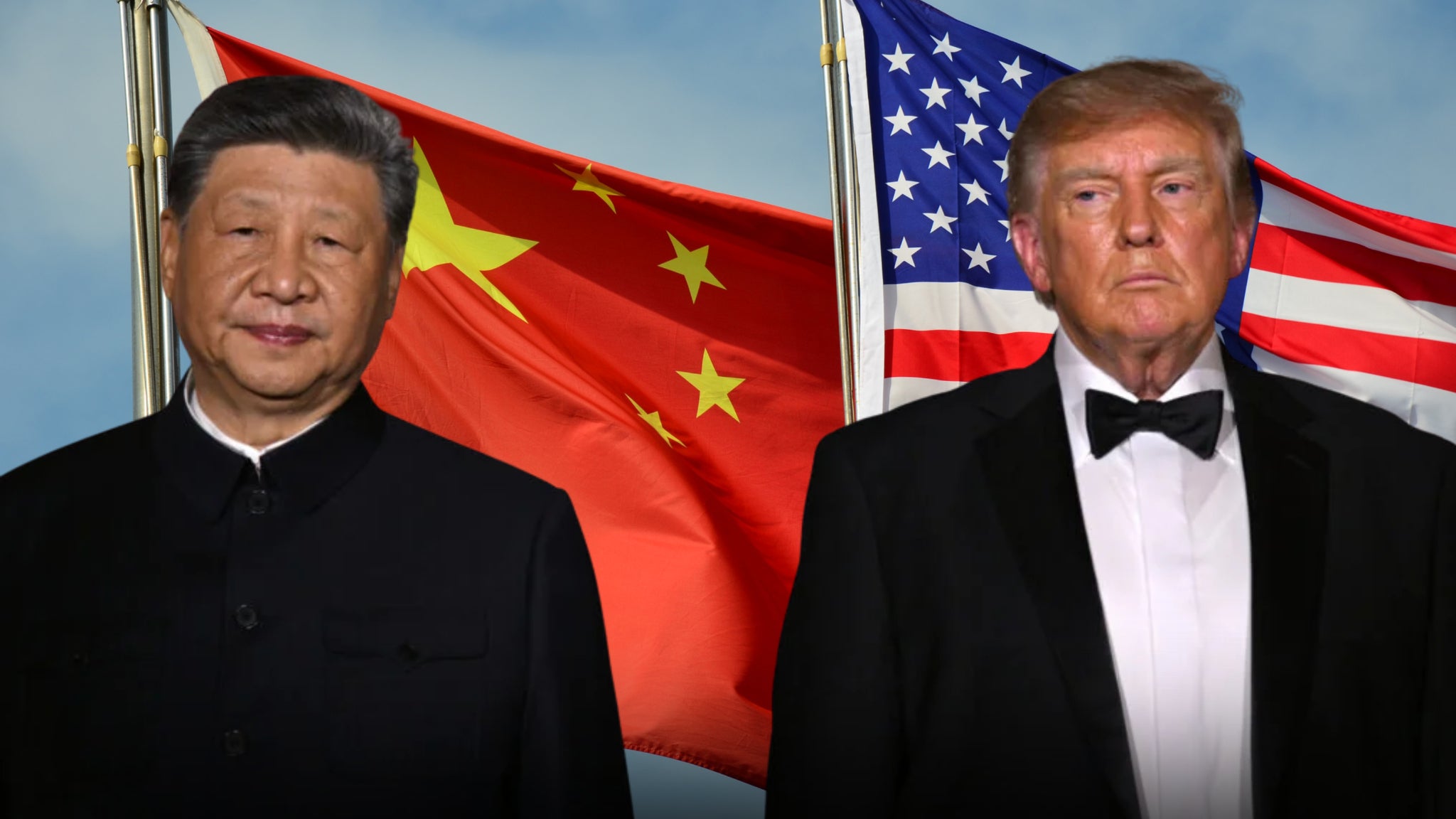
By announcing new customs duties targeting 14 major trading partners of the United States, including China, Washington risks worsening its trade relations with Beijing by making the latter its main target in its strategy aimed at reorganizing world trade. If these new customs duties against China, increasing by 20%, remain within the limits of the trade truce concluded between the two powers, the United States has left itself room to maneuver to raise the stakes in the run-up to the G20 summit scheduled for next month in Miami and the expiration, on January 10, of the Sino-American trade agreement. “If the trade war were to resume, these measures (the new tariffs) provide the United States with ammunition,” said Mark Williams, chief Asia economist at Capital Economics.
"The focus on China in third-country reporting echoes efforts earlier in US President Donald Trump's second term to use economic leverage to push other countries to strengthen their trade defenses and dissociate from China," he noted. The White House said Wednesday it plans to increase tariffs on China by 20%, on top of 25% taxes dating from the US president's first term. A limit agreed by leaders as part of the trade truce, a breach of which could increase customs duties to 40%.
The Chinese Ministry of Foreign Affairs reacted to the new trade measures imposed by Donald Trump by rejecting accusations of unfair industrial practices leveled by Washington against China, without going so far as to threaten to retaliate. These new customs duties follow an eight-month US investigation into unfair trade practices, which focused on industrial overcapacity across the world. The United States is putting similar pressure on other economies with which it has or is negotiating trade deals, from the European Union to Japan to some Southeast Asian countries.
But China stood out: the United States criticizes its partners for not doing enough to curb imports and investments from their rival, on track to exceed the $1,000 billion trade surplus for the second year in a row. A new breakdown in Sino-American relations?
This new attempt, the second, by Donald Trump to redefine global trade follows the decision of the country's Supreme Court to declare illegal the numerous customs duties imposed by the American president in April 2025, for "Liberation Day". These measures led to increased tariffs on virtually all of the United States' trading partners, but only China responded with all its might against Washington's offensive. In a rapid escalation between the two powers, reciprocal tariffs briefly reached triple-digit rates and China used its dominance in rare earth refining to demonstrate its ability to cripple sectors through export controls.
But the American-Chinese summits and the repeated meetings between Donald Trump and his Chinese counterpart which followed stabilized hostilities. China's warm welcome to Donald Trump this month, with Chinese President Xi Jinping breaking tradition by welcoming him at the airport, suggests that a 2025-like escalation is not imminent. This week, several signs also showed that the trade truce was still holding strong.
Beijing extended the suspension of its controls on exports of rare earths to the United States, while China Southern Airlines announced that its subsidiary Xiamen Airlines had agreed to buy 50 Boeing 737 MAX 8 planes. And although the possibility for Washington to further increase customs duties promises more room for maneuver, the White House will be wary of the inflationary impact of these taxes, particularly after the setback suffered by the Republicans in the midterm elections at the beginning of the month. “China absolutely does not want to wage another trade war with the United States, and the United States probably does not want one either,” said Chen Bo of the National University of Singapore.
"Both sides want to reach an agreement." Tensions with other trading partners After "Liberation Day", the United States' trade deficit with China declined, but other economies' deficits with China followed an opposite trend. This has pushed governments to protect their own domestic industries and jobs in the face of a Chinese economy that contributes more to global supply than demand.
Beijing's critics say weak Chinese household consumption and the country's growing dependence on exports mean its economy is growing at the expense of other countries. “China’s failure to restructure its economy will be an even bigger driver of trade tensions than reversals in inconsistent U.S. trade policies,” said Viktor Shvets, international strategist at Macquarie Capital. If the European Union is today bearing the brunt of Chinese imbalances, he added, the same fate is inevitable for all the others.
“We therefore expect an increase in tariff and non-tariff measures.” Brussels, which convinced Beijing this year to accept quotas on certain imports of Chinese cars into the EU, is also planning other trade measures. This agreement shows that China cannot maintain an aggressive posture on trade all the time or on all fronts, and that other compromises of this type are expected, noted Bo Zhengyuan, partner at research consultancy Plenum.
“China has not always won its case in trade matters,” observed the researcher, based in the commercial hub of Shanghai. Beijing “will still have to make concessions” in order to find common ground with its partners.
Machine-translated from French
Not cross-checked yet
Only BFM Business reports this story so far. We show it as a single source until another newsroom confirms it.
- BFM Business27 Nov, 06:02
| Publisher BFM Business (established tier) | +76 |
| Detailed summary | +2 |
| Total | 78 |
Method: reports are grouped by the words of their headline and summary; each newsroom counts once; figures are read from the reports as published. Nothing here is written by an AI.