Coutot-Roehrig: on the trail of heirs for more than 130 years
#DECRYPTAGE - COUTOT ROEHRIG (partner content) Aude Kersulec received Guillaume ROEHRIG, Managing Director of COUTOT ROEHRIG in DECRYPTAGE. This broadcast was produced by our partner Scribeo.
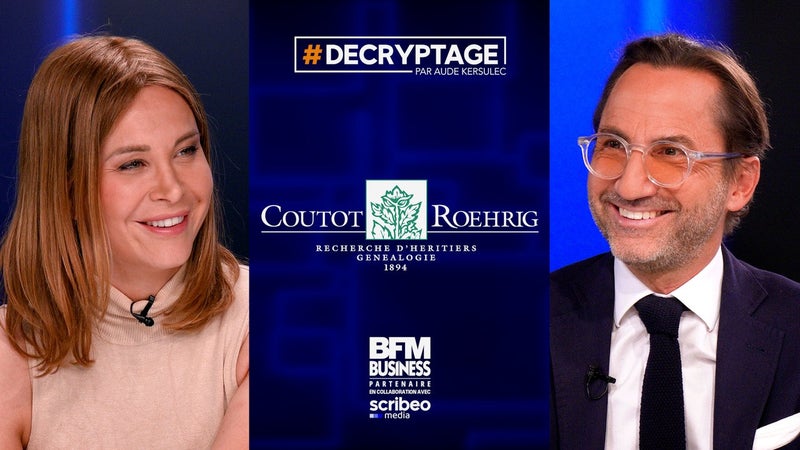
Coutot-Roehrig, a family‑law practice headquartered in Paris, has made headlines this week for its almost‑centennial pursuit of long‑hidden heirs. Founded in the late 19th century, the firm has built a reputation for combing through the dusty archives of old estates to uncover rightful descendants and close dormant wills. This new episode, covered in an exclusive interview on BFM Business by partner content provider Scribeo, spotlights the firm’s 130‑year‑old legacy of “tracking down heirs” and the modern challenges that accompany it.
The firm’s origins lie in a period when probate law was largely a matter of paperwork and physical documentation. Over the decades, as the services of genealogists and archivists evolved, Coutot‑Roehrig positioned itself as the bridge between the law and the increasingly complex family histories of its clients. Its continued emphasis on locating heirs reflects broader cultural trends—our society’s growing interest in personal heritage and the legal importance of “unsuccessful” inheritances that could otherwise evaporate into public trust or become contested by distant relatives.
In the recent Scribeo broadcast, Guillaume Roehrig, Managing Director of Coutot‑Roehrig, and journalist Aude Kersulec discussed a case that epitomises the firm’s raison d’être. The subject involved a 19th‑century estate whose original will lists remained ambiguous, sparking a search through church registers, civil records, and a handful of intangible assets. The case is not unique, but it illustrates the exhaustive nature of the firm’s work: a blend of meticulous archival research and modern legal strategy, often requiring coordination with foreign jurisdictions.
For the parties involved, the stakes are higher than the financial sums that the estates might represent. Interpreting the intentions of a deceased generation can change the allocation of assets, sometimes preventing prolonged litigation or even civil unrest among remote family members. From a market perspective, the case underscores a persistent demand for specialist elder‑law services and the legal industry’s adaptation to a demographic shift where the average age of death climbs and families become more dispersed.
The economic ripple of Coutot‑Roehrig’s long‑standing work stretches beyond its own client roster. As more estates become subject to inheritance tax constraints and cross‑border scrutiny, legal firms that can offer specialised genealogical services are likely to see higher demand. The industry is already watching the rise of digital archival tools and AI‑driven data mining, both of which could dramatically lower the cost and time required to locate heirs. Consequently, firms like Coutot‑Roehrig could benefit from a niche positioning, but they must also prepare for regulatory changes that may standardise or expedite heir‑notification processes.
Machine-translated from French
Not cross-checked yet
Only BFM Business reports this story so far. We show it as a single source until another newsroom confirms it.
- BFM Business28 Oct, 11:41Coutot-Roehrig: on the trail of heirs for more than 130 years ↗Figures: 130 ans
| Publisher BFM Business (established tier) | +76 |
| Detailed summary | +2 |
| Total | 78 |
Method: reports are grouped by the words of their headline and summary; each newsroom counts once; figures are read from the reports as published. Nothing here is written by an AI.