Mass retirements, increase in care, drop in schooling: Cese calls for planning to prepare for a France which could lose 3.6 million inhabitants
In a context of aging of the French population and a decline in the birth rate, the Economic, Social and Environmental Council considers planning essential to cope with the demographic changes that are looming.
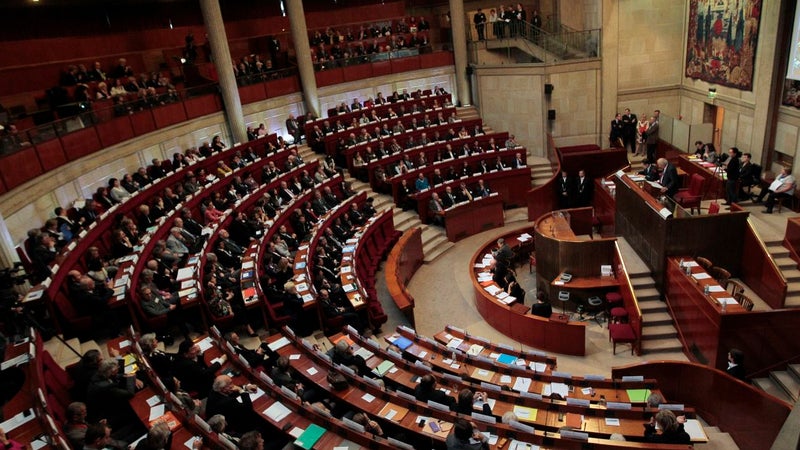
The Old Continent continues to age, and France is no exception to the rule. According to INSEE, by 2070, France could lose 3.6 million inhabitants. According to projections, the country should then have 19.6 million people aged 65 and over, compared to 14.8 million currently.
It is with this observation, combined with a decline in the birth rate in the country for several years, that the Economic, Social and Environmental Council (Cese) considers that “planning is essential”. In a report published Wednesday, the government agency is concerned about political unpreparedness when all public policies will be affected by this demographic change. Sectors more affected than others According to the report, a quarter of the working population will retire during the next decade.
This concerns 7.4 million people, "with particularly marked shocks in certain professions", such as home help, agriculture and the hotel and catering industry which will lose more than a third of their workforce, according to Cese. For the Cese, it is necessary to "initiate a major reflection on the attractiveness of professions and on the expectations of new generations, in order to better take into account the transformations in work aspirations and the conditions of practice of professions faced with recruitment needs". Necessary changes The number of seniors is increasing sharply, due to the arrival at an advanced age of large baby boom generations.
The number of French people aged 75 to 84 will increase from 4.1 to 6.1 million between 2020 and 2030, according to an official report. Cese recalls that the aging of the population will mechanically increase the needs for care. He calls for “a strengthening of prevention, community medicine and coordination mechanisms between care and social support”.
Today, the health system is above all centered on the hospital and oriented towards curative care, underlines the report. Furthermore, in 2025, 644,000 babies were born, almost a quarter less than in 2010, the date of the last peak in births, according to the National Institute of Statistics (Insee).
The drop in the birth rate will therefore primarily affect National Education. Schools could lose nearly 1.7 million students by 2035, according to official statistics. Regarding the announced reduction in the number of students, Cese wishes to take advantage of this opportunity to “improve the quality of the public education service”.
Among the main avenues mentioned by the report, we find the reduction of class sizes, the strengthening of consultation times and the adaptation of school buildings to climate change.
Machine-translated from French
Not cross-checked yet
Only BFM Business reports this story so far. We show it as a single source until another newsroom confirms it.
- BFM Business28 Oct, 16:03
| Publisher BFM Business (established tier) | +76 |
| Detailed summary | +2 |
| Total | 78 |
Method: reports are grouped by the words of their headline and summary; each newsroom counts once; figures are read from the reports as published. Nothing here is written by an AI.