France 'at the start of a recession'? Q3 contraction weakens government growth and deficit targets for 2026
In a mood of gloom, the French economy contracted by 0,1% in the third quarter - another setback that challenges the growth and public deficit forecasts for 2026.
Another hard blow for the French economy. After a decline in GDP in the first quarter (-0.2%) and stagnation in the second, French activity contracted again in the third (-0.1%), INSEE announced this Friday. An additional disappointment as the institute initially expected growth of 0.1%.
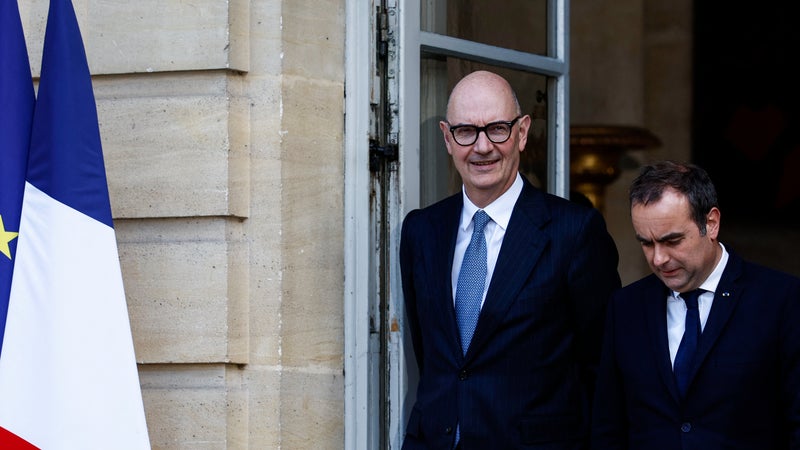
“It has been three quarters that growth has not been there” and “the conclusion of all this is that in 2026, the French economy is at a standstill,” admitted the Minister of the Economy, Roland Lescure. Budgetary tensions, political instability... France is paying dearly for the deleterious environment in which it operates and which contrasts sharply with the situation of its neighbors: GDP, for example, increased by 0.2% in the third quarter in Germany, exceeding expectations, and continued to prance in Spain, with +0.6%.
“This is objectively very bad news” because it is “a rather dark scenario for the French economy”, underlines on BFM Business Anthony Morlet-Lavidalie, economist at Rexecode, adding that all this looks “like the start of a recession”. Investment is collapsing, consumption is resisting (for the moment) "The French economy is not in recession in the technical sense of the term, which supposes two consecutive quarters of contraction, but it is in real stagnation, marked by the weakening of investment, the difficulties of industry and the volatility of exports", explains Philippe Crevel, economist and director of the Circle of Savings. Indeed, the level of investment (-0.6%) undoubtedly weighed down by the high level of uncertainty is “worrying”, confirms Anthony Morlet-Lavidalie.
“We are experiencing three fairly significant consecutive declines and this affects all stakeholders: public administrations, households and businesses.” But the economy is also weakened by the surprise contraction in exports, particularly in aeronautics. So much so that foreign trade is responsible for -0.6 points of the decline in GDP in the third quarter.
The only consolation prize: household consumption which is holding up (+0.4%), despite the return of inflation in the wake of the war in the Middle East. But for how long? “We may not have yet reached the bottom because household consumption could suffer more in the quarters to come” if prices continue to grow, warns Anthony Morlet-Lavidalie.
Machine-translated from French
Not cross-checked yet
Only BFM Business reports this story so far. We show it as a single source until another newsroom confirms it.
- BFM Business30 Oct, 11:51
| Publisher BFM Business (established tier) | +76 |
| Checkable figures cited | +3 |
| Detailed summary | +2 |
| Total | 81 |
Method: reports are grouped by the words of their headline and summary; each newsroom counts once; figures are read from the reports as published. Nothing here is written by an AI.