“Like the Roman Emperor Nero”: Silicon Valley has entered the “era of the imperial CEO”, from Jensen Huang to Elon Musk, how tech bosses have become untouchable despite scandals
Accused of extramarital affairs, including one with a woman suspected of spying for China, the boss of Nvidia returned to his post a few days after leaving it. A scenario reminiscent of that experienced by Elon Musk in…
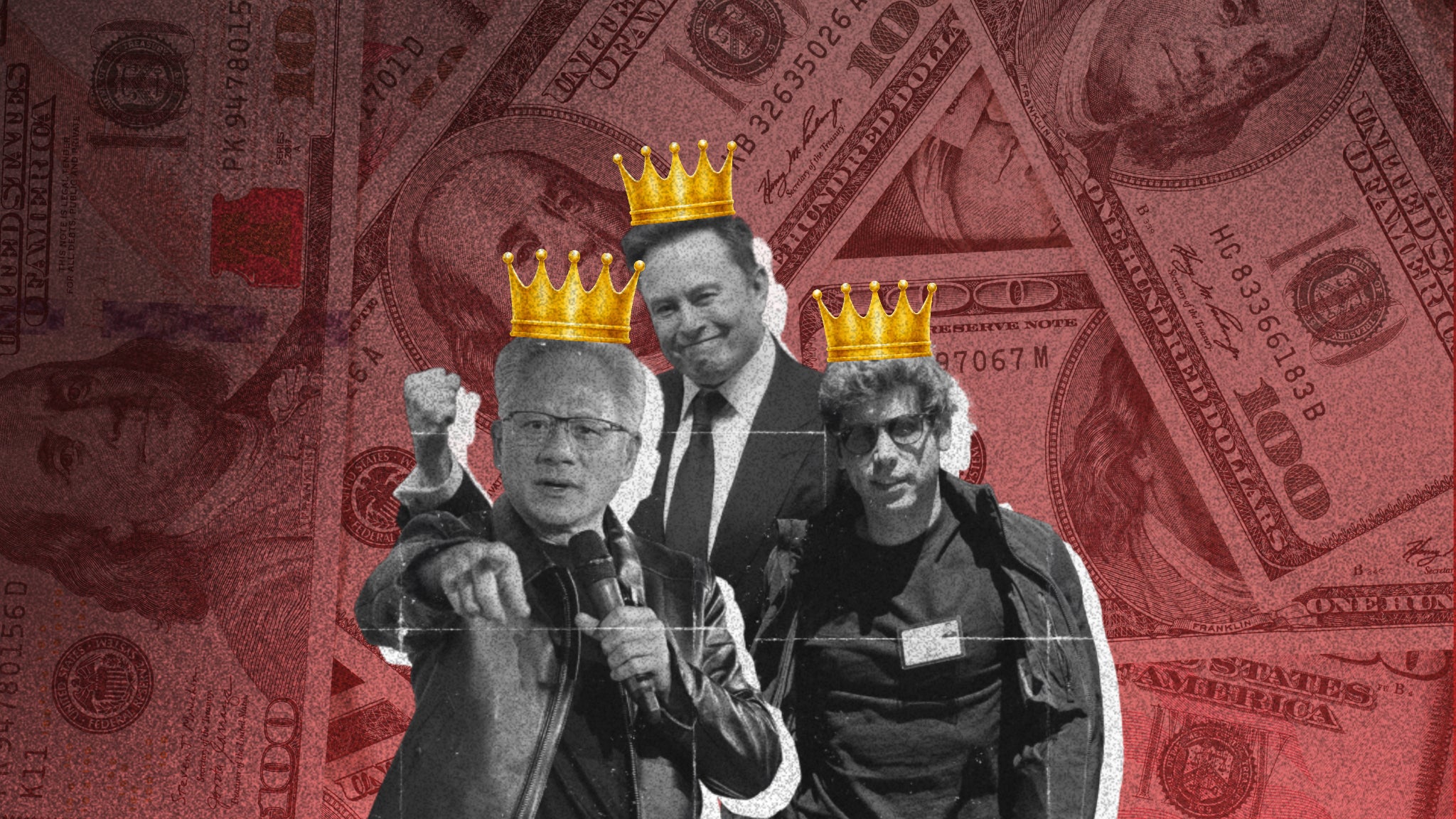
We must believe that we can forgive the bosses of Silicon Valley everything. This Monday, November 23, Jensen Huang regained control of Nvidia barely eleven days after having resigned following revelations about several extramarital affairs, including one with a woman suspected of spying for Beijing. And Jensen Huang is not the first tech boss to escape disgrace, reports the Washington Post.
In 2018, Elon Musk also came very close to the exit. At the head of Tesla, the billionaire then accumulated slip-ups and problems with the authorities. An analyst then estimated that he only had a 25% chance of retaining his position.
Eight years later, the richest man in the world still runs his car manufacturing company, SpaceX and X. The previous Musk It all started with a tweet. In August 2018, Elon Musk claimed to have the necessary financing to remove Tesla from the stock market.
The announcement caused the stock to jump, and triggered an investigation by the American financial markets watchdog, the SEC, which accused him of having misled investors. Elon Musk finally agrees to step down as chairman of Tesla's board of directors and pay a $20 million fine. The company receives the same amount.
At the same time, Elon Musk is the subject of a defamation complaint. The boss of Tesla is said to have called a British caver who participated in the rescue of twelve children trapped in a cave in Thailand a “pedophile”. The scientist had the audacity to criticize his idea of sending a mini-submarine to help them.
There was also this famous joint, smoked live on Joe Rogan's set. The episode led NASA to open a security review concerning SpaceX, one of its service providers. The billionaire was then forced to remind his employees by email that the company applied a zero tolerance policy towards drugs.
At Tesla, investors are worried. Legal proceedings, pressure from the authorities, uncertainties about the future of the company... There is no shortage of reasons.
A system, called Twitter sitter, is even set up to monitor the boss's publications and prevent a tweet from causing the stock to slide. Scandals pass and do not last But Elon Musk weathers the storm without losing control. In 2020, Donald Trump even came to his defense, urging the Californian authorities to reopen the Tesla factory, closed due to health restrictions.
Tesla's price is soaring, making the manufacturer the world's leading automobile manufacturer in terms of valuation. The scandals never stop. A flight attendant accuses him of sexual harassment aboard his private jet, saying he offers her a horse in exchange for sexual favors.
Musk denies this. He also has several children with Shivon Zilis, a manager of his companies. Here again, nothing to shake his empire.
Even his political shift and his time at the head of DOGE, which caused an outcry and turned away some of Tesla's customers, did not change anything. Stock market prices are plummeting. But Tesla ends up regaining favor with the markets, while SpaceX in turn whets the appetite of investors with its IPO plans.
Elon Musk then becomes the first man in the world whose personal fortune exceeds 1,000 billion dollars. Enough to further consolidate his untouchable status.
Last year, shareholders even granted him an extraordinary compensation plan, conditioned in particular on a valuation of 8.500 billion dollars within ten years. “Build a big enough company, with a high enough market capitalization, and convince the world that it would collapse without you: then you can do whatever you want, like the Roman emperor Nero,” summarizes Erik Gordon, professor at the University of Michigan, to the Washington Post.
Silicon Valley has changed rules For governance specialists interviewed by the Washington Post, Silicon Valley has gradually given up the rules that once allowed the removal of a boss who had become too cumbersome. Travis Kalanick had paid the price. In 2017, Uber's co-founder left management after a series of revelations about the company's toxic culture and its methods of circumventing authorities.
He finally resigned under pressure from a shareholder revolt. Mark Zuckerberg also knows something about this. After the revelations about Facebook's role in the circulation of content likely to have influenced the 2016 American presidential election, the boss of the social network had to apologize.
Since then, the balance of power has changed. In 2023, when the OpenAI board of directors ousts Sam Altman following a disagreement, it only takes a few days to regain his place, driven by the mobilization of employees and the support of investors. The council, supposed to exercise counter-power, finds itself in turn disowned.
For tech bosses, the episode sets a precedent: you can now arrive on Monday and return on Friday. For Erik Gordon, the problem comes in particular from those who finance these companies. Once scarce, investor money has become more abundant.
Funds, which once had the means to impose their conditions, now seek to seduce founders. A philosophy which ended up being transformed into a blank check. As long as the leader grows the company, his methods matter less.
“Adult supervision” has thus given way to a form of deference, even servility, towards bosses, believes the professor. The era of the imperial CEO The problem doesn't stop with investors. Boards of directors, too, are less and less able to act as safeguards.
The founding leaders gradually strengthened their control over these bodies, surrounding themselves with relatives and followers. At Tesla, Elon Musk's brother Kimbal sits on the board of directors. Antonio Gracias, a long-time associate of the billionaire, also occupies a place within the ecosystem of his companies, notably at SpaceX.
“We definitely live in an era of billionaires splurging,” observes Nell Minow, a corporate governance expert and president of ValueEdge Advisors. According to her, the return of Jensen Huang marks the culmination of this evolution. “No one is untouchable, especially in a publicly traded company.
But we certainly live in the age of the 'imperial CEO,'" she observes. "Elon Musk has served as a cautionary tale to many leaders, and they are all building moats around themselves. “It is precisely this network of loyalties that worked in Jensen Huang’s favor.
In recent weeks, several tech executives have come to its defense and pleaded for its return. Elon Musk himself participated in the maneuvers, before publishing on X a photograph taken with him at Nvidia headquarters. He also claimed to have played a role in efforts to reinstate the boss in his post.
Lloyd Blankfein, former boss of Goldman Sachs, had however delivered a completely different thought at the height of the controversy. “The cemeteries are full of indispensable men,” he wrote on X, using a phrase attributed to Charles de Gaulle. Ten days later, after Jensen Huang returned, he revised his judgment: “So you can come back from the cemetery if you are really, really, really indispensable.
“To see if Silicon Valley and the race for AI change the situation, but in bad horror films, returning from the cemetery is always accompanied by a curse.
Machine-translated from French
Not cross-checked yet
Only BFM Business reports this story so far. We show it as a single source until another newsroom confirms it.
- BFM Business27 Nov, 14:36
| Publisher BFM Business (established tier) | +76 |
| Detailed summary | +2 |
| Total | 78 |
Method: reports are grouped by the words of their headline and summary; each newsroom counts once; figures are read from the reports as published. Nothing here is written by an AI.