High‑school students outraged: announcements this afternoon
Sébastien Lecornu and his Minister of National Education will meet with associations and unions today. They will present a series of responses to their demands, and the announcements will be made at the end of the day.
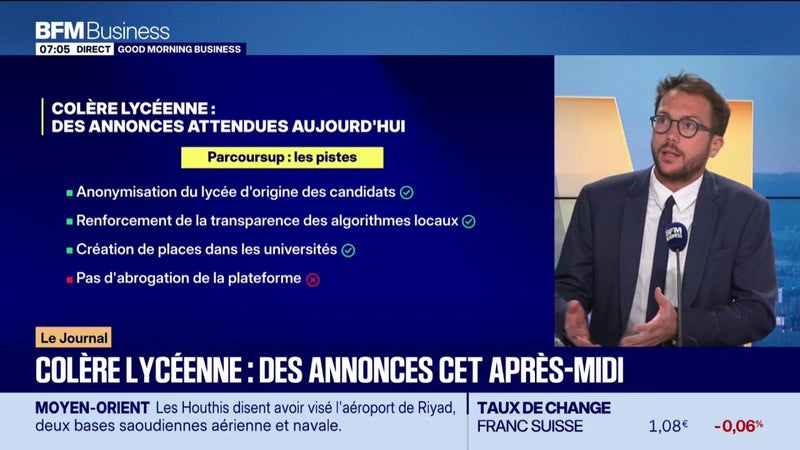
In a wave of anger that has swept across France’s secondary schools, thousands of high‑school students gathered in city squares, chanting slogans and demanding a rethink of the nation’s education system. The protests—part of a long‑running tradition of student activism that was most visible in the 2006 ‘March of the Students’—have focused on what critics describe as a curriculum suffering under bureaucratic pressure, a lack of teaching staff, and a heightened test‑driven culture that many say does not prepare pupils for the real world. This morning, the government’s response came not from the ministry’s usual podium but from a high‑profile gathering in Paris where Deputy Prime Minister Sébastien Lecornu was joined by the Minister of National Education for a meeting with student‑representative organisations and union leaders.
The meeting, which began at 9 a.m. in a government office, was itself a concession: it signalled that the government acknowledged the scale of the unrest. Key demands from the student unions—improved access to information technology, greater autonomy for schools in curriculum design and the reduction of compulsory exams—have been echoed in the broader national debate over the country’s commitment to educational excellence versus the lived needs of learners. Students press from the centre of Paris to the suburbs have called for reforms that would shift the system from a prescriptive, examination‑centric approach to one that fosters critical thinking and practical skills.
At the heart of the discussion, Lecornu and the Education Minister drafted a package of “responses” that will be communicated to the public later in the day. The proposals reportedly aim to provide more resources for teachers, to streamline the national curriculum and to expand digital learning tools across all secondary schools. While the details remain undisclosed, officials say they will align with government priorities to keep the nation competitive in a knowledge‑based economy, without a fundamental overhaul of the existing system. The ministers also pledged to set up a joint task‑force with student representatives to monitor the implementation of any agreed reforms.
From an economic standpoint, the impasse has implications beyond the classroom. France’s public education budget accounts for roughly 16 % of total public spending. Economic analysts note that a failure to satisfy pressing teacher shortages and upgrade classroom technology could translate into higher long‑term costs for the government and reduced productivity of the workforce. Likewise, widespread disaffection of secondary students might dampen enrolment in higher‑education institutions, thereby affecting the supply of skilled labour in critical sectors such as STEM and digital technologies.
The announcement, set to be made later this afternoon, will likely shape the next chapter in France’s education debate: will it pacify the protests or incite additional actions? If the government delivers substantive reforms—particularly in resource allocation and curriculum flexibility—it could reinforce its standing as a responsive and progressive policy maker. Conversely, a lukewarm or postponed decision might bolster student confidence in the protest movement, potentially propelling a series of industrial actions that could disrupt not only schooling but also the broader economic rhythm of the country.
Machine-translated from French
Not cross-checked yet
Only BFM Business reports this story so far. We show it as a single source until another newsroom confirms it.
- BFM Business26 Oct, 07:31
| Publisher BFM Business (established tier) | +76 |
| Detailed summary | +2 |
| Total | 78 |
Method: reports are grouped by the words of their headline and summary; each newsroom counts once; figures are read from the reports as published. Nothing here is written by an AI.