The US-China trade war seems to have subsided – but the sense of calm is misleading
A truce has cooled the trade conflict, but neither country has done anything to limit the outbreak of new hostilities Donald Trump ’s trade wars have largely fallen off the headlines. Fears of new tariffs flare up from…
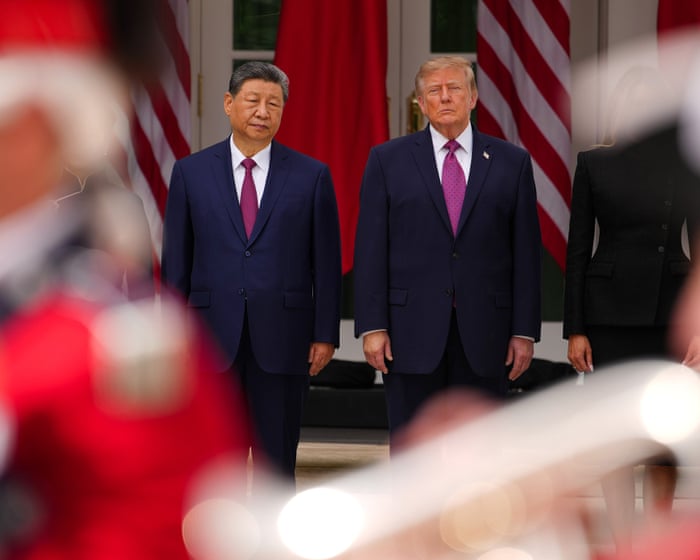
Analysis The US-China trade war seems to have subsided – but the sense of calm is misleading Eduardo Porter A truce has cooled the trade conflict, but neither country has done anything to limit the outbreak of new hostilities
Donald Trump ’s trade wars have largely fallen off the headlines. Fears of new tariffs flare up from time to time when the US president goes off the rails – for instance, threatening to end US trade with countries with which it has a deficit unless the Federal Reserve cuts interest rates. But the sense that the world’s two largest economies are plowing ahead into an overt economic conflagration has taken a back seat to other, more salient fears, about Trump ending American democracy, AI killing us all and stuff like that.
The sense of calm is misleading. Under the radar, the world is marching toward an economic war of potentially epic proportions, one that, history suggests, could well spill over into the real thing.
The truce reached by Washington and Beijing last year in their escalating trade conflict, which has been extended until next January, lowered the heat between the two – putting an end to the escalation of tit-for-tat tariffs and opening a door to some as yet undefined future trade deal.
But neither China nor the US has done anything to establish the mutual assurances that could limit the outbreak of new hostilities. Rather, they are both focused on gaining the upper hand in what seems like an inevitable next round, in a standoff that both sides have defined as a national security priority, essential to ensure economic, technological and military supremacy.
The new arms race is different from those in the past. Rather than building weapons to blow each other up, China and the US are focusing on ensuring the resilience of the international supply chains on which they rely and figuring out how to constrain – and if push comes to shove, throttle – the supply chains essential to the economic and technological progress of their rival.
The paired strategies go back at least to the Covid pandemic, when China’s Xi Jinping called on the nation to “tighten international production chains’ dependence on China, forming a powerful countermeasure and deterrent capability against foreigners who would artificially cut off supply [to China]”.
Early in the Biden administration, national security adviser Jake Sullivan articulated the American goals: to limit China’s access to a narrow set of advanced technologies with military applications without upending the global economic order. He described the strategy as building a “small yard” of forbidden tech surrounded by a “high fence” of trade and investment controls.
Not cross-checked yet
Only The Guardian reports this story so far. We show it as a single source until another newsroom confirms it.
- The Guardian1 Nov, 13:00
| Publisher The Guardian (reference tier) | +82 |
| Detailed summary | +2 |
| Total | 84 |
Method: reports are grouped by the words of their headline and summary; each newsroom counts once; figures are read from the reports as published. Nothing here is written by an AI.