This former Radio France journalist inherited one of the most complicated missions in Europe: saving the finances of the country which has the largest deficit in the EU at nearly 8% of GDP.
In the midst of a political crisis, former Francophile journalist and diplomat Luca Niculescu was appointed Prime Minister of Romania. He will have to regain control of public finances, which have deteriorated…
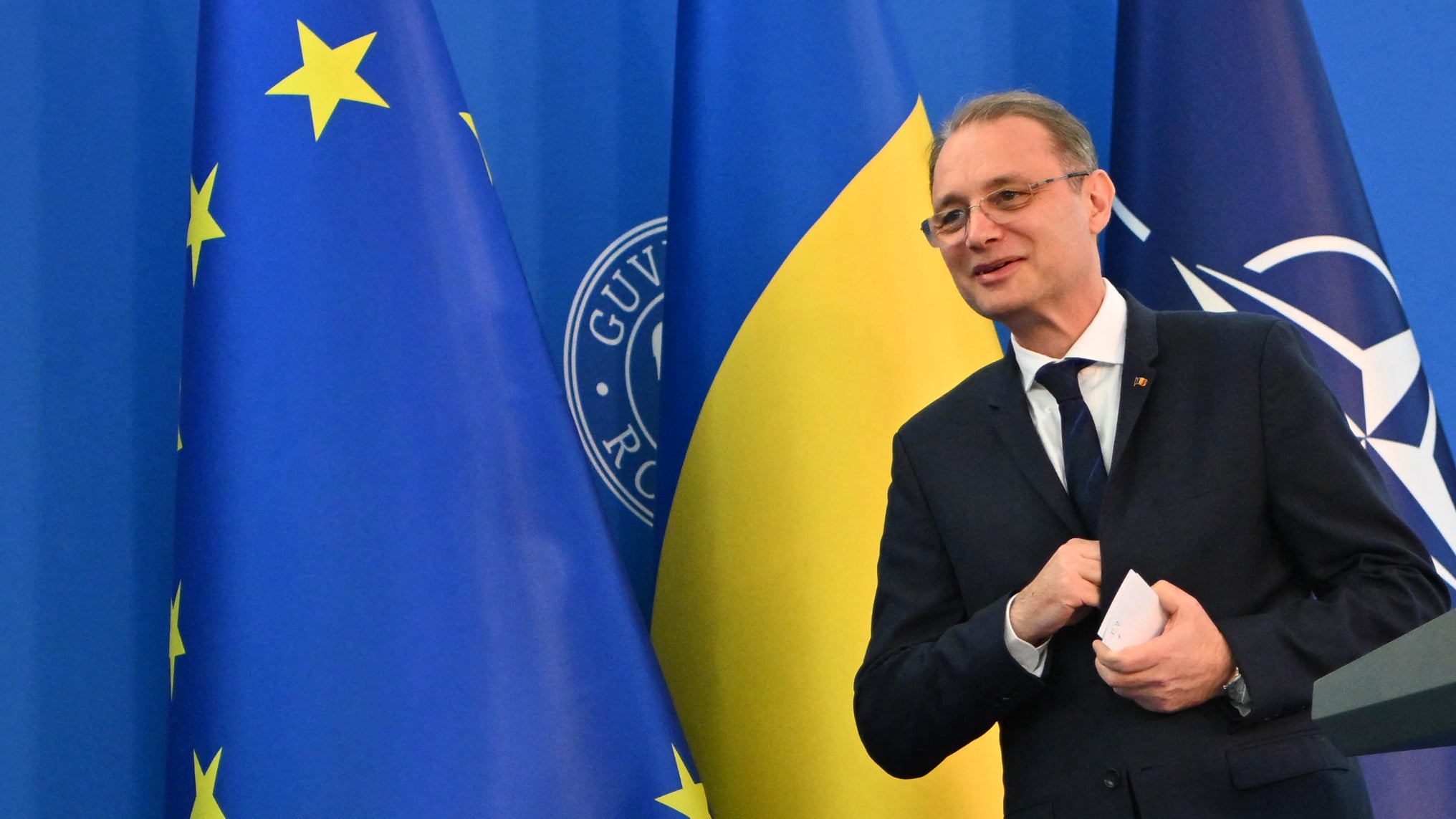
Luca Niculescu has inherited a particularly thorny task. This former journalist and ambassador to France has just been appointed Prime Minister of Romania at the end of October, with the primary mission of restoring his country's very degraded public accounts. Romania has the highest public deficit in the European Union (7.9% of gross domestic product in 2025), after reaching a historic peak of 9.3% of GDP in 2024.
“Obviously, this is not a simple mission,” the new Prime Minister, 55, admitted this week to the Financial Times. The previous government and its austerity plan were in fact censored by Parliament in the spring, plunging the country into a deep political crisis, in a context of political instability and the rise of nationalist parties, as shown by the cancellation of the 2024 presidential election after suspicions of Russian interference. At the head of a government composed of members of the center-left and technocrats, Luca Niculescu was not really predestined for the position.
This fifty-year-old has long been a journalist for the Romanian subsidiary of Radio France Internationale (RFI), correspondent for the French press and host of political programs in his country. This graduate of the University of Strasbourg then began a shift towards diplomacy, notably serving as Romanian Ambassador to France (2016-2022) before becoming Secretary of State for Foreign Affairs. With no party affiliation, he was only President Nicușor Dan's fourth choice.
Before him, the Romanian head of state appointed three Prime Ministers in five months, without any of them managing to convince Parliament. High inflation This instability complicates the restoration of public accounts, while the country's debt has jumped since the health crisis, going from 35% of GDP in 2019 to 61% in 2026. In absolute terms, this remains a level consistent with the criteria of the Maastricht Treaty, but the continued increase in debt and the level of the public deficit worries the European Commission, which threatens to cut off EU funding.
The increase in debt is explained by the slowdown in growth observed since the health crisis and by the high inflation that affected Romania after Russia's invasion of Ukraine. Since 2021, prices there have jumped on average by more than 50%, prompting the state to put in place costly tariff shields, while borrowing rates skyrocketed, reaching 7.2% for 10-year government bonds this month. Retirement pensions and civil service salaries have also been significantly increased, without tax revenue following suit.
To redress the situation, the former journalist intends to reduce public spending by reforming administrations and merging ministries, but says he excludes reducing pensions and social benefits, a red line for the social democratic party which supports him. Luca Niculescu also intends to tackle the flaws in the Romanian tax system. The State is struggling to correctly recover taxes, particularly VAT, and to combat tax fraud.
Ultimately, compared to its GDP, Romania collects less taxes than the average of European countries. "The gifted child of the European family" From next year, the new Prime Minister should be helped by a recovery in economic activity, very affected this year by budget cuts which have contributed to weighing down consumption and investment. The country's growth is expected to be around 2% in 2027 and 2028 by the European Commission.
It also notes that a major gas exploitation project in the Black Sea, called "Neptun Deep", should boost the country's exports. Brussels therefore expects a slow reduction in the public deficit to 5.6% by 2028. In the medium term, some analysts are rather optimistic.
“Romania has talent, abundant energy resources, a significant digital economy, fertile land, a strategic geographic location and immense potential to improve its infrastructure. Few European countries benefit from such a range of opportunities,” observe ING bank economists Marieke Blom and Valentin Tataru in a note. “Within the European family, Romania is the gifted child: obviously talented, sometimes brilliant, but often incapable of transforming its abilities into consistent success.
A bit like this student who could be at the top of his class, but who rarely turns in all his homework", even argue Marieke Blom and Valentin Tataru in their note. The latter recall that the country had until now made a particularly rapid economic catch-up since its entry into the European Union in 2007. In purchasing power parity (PPP), its GDP per capita increased from 15.
000 to 50,000 dollars (compared to 64,000 dollars in France for example), according to figures from the World Bank.
However, the country remains marked by very strong disparities between regions. The most peripheral people remain among the poorest in the EU.
Machine-translated from French
Not cross-checked yet
Only BFM Business reports this story so far. We show it as a single source until another newsroom confirms it.
- BFM Business21 Nov, 14:25
| Publisher BFM Business (established tier) | +76 |
| Detailed summary | +2 |
| Total | 78 |
Method: reports are grouped by the words of their headline and summary; each newsroom counts once; figures are read from the reports as published. Nothing here is written by an AI.