An embarrassing affair between the boss of Nvidia and a Chinese spy: from Soviet submarines to traps set by the FBI for the Japanese, the crazy stories of technological espionage
A case of alleged espionage surrounding the boss of Nvidia, the world's largest stock market capitalization, is a reminder of the extent to which technology has become a power issue. Yesterday, the great powers were…
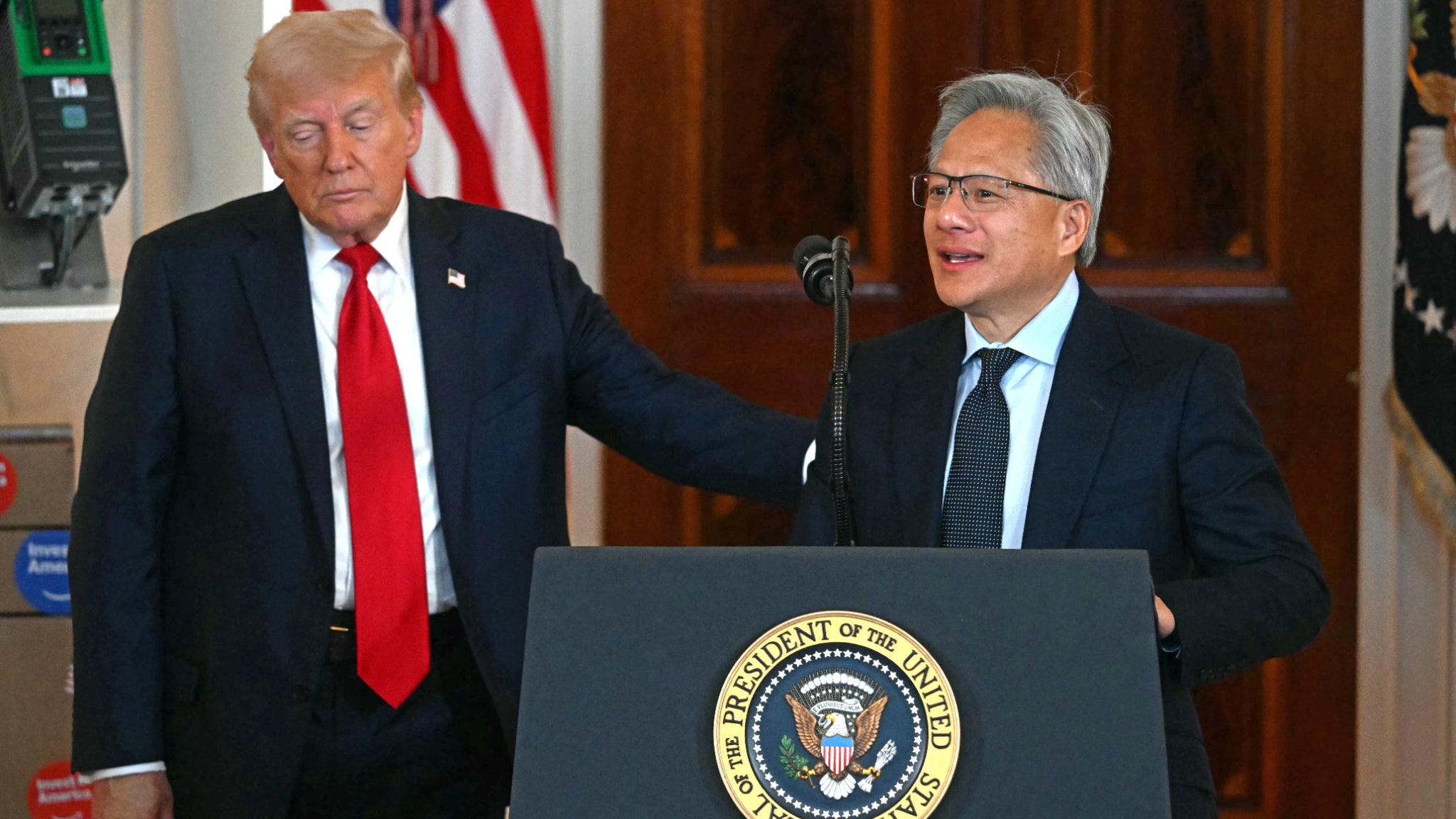
The story is enough to embarrass Nvidia. Jensen Huang, the boss of the American microchip giant, finds himself at the center of a case involving a woman suspected of spying for China. A story that reminds us to what extent the secrets of technology giants have become national security issues.
Basically, it's always the same battle for technological supremacy. Yesterday, the one who mastered the atom and the conquest of space could claim to dominate the world. Today, it is whoever masters artificial intelligence who will have a major strategic advantage.
China perfectly understands the issue. In 2015, Beijing launched its “Made in China 2025” program, with a major strategic priority: reducing its dependence on foreign technologies and conquering strategic industries, notably semiconductors. The objective is clear: to no longer depend on the West for the technologies of the future.
And to achieve this, Beijing is investing massively, training engineers and recruiting researchers abroad. Ten years later, the bet has largely succeeded in several sectors. China has gone from subcontractor to principal.
In the automobile industry, for example, the roles have been reversed. Yesterday, Western manufacturers went to China to manufacture their cars there. Today, it is Chinese manufacturers, like BYD, who are setting out to conquer Western markets.
Same thing for electric batteries: China represents more than 80% of global battery cell manufacturing capacity. As for solar panels, nearly 80% of modules manufactured worldwide are Chinese. Clearly, in several strategic industries, China has become the essential supplier.
Semiconductors, the last big barrier But there remains one barrier that Beijing has not succeeded in breaking down: the most advanced semiconductors. China knows how to make chips, but it remains behind on the most sophisticated ones, those which make it possible to train the most powerful artificial intelligences. Because in this industry, everything happens on a microscopic scale.
We must succeed in engraving billions of transistors over a few square centimeters, with extreme precision. And this is where the Americans, with Nvidia, and the Taiwanese, with TSMC, maintain a strategic lead. It is precisely this technological advance that Beijing is seeking to catch up with.
And this is what makes semiconductors one of the major targets of industrial espionage. In 2022, FBI Director Christopher Wray warned of the scale of the phenomenon: his agency opened a new counterintelligence investigation linked to China approximately every twelve hours. Another revealing case: that of Linwei Ding, a former Google engineer, accused of having stolen more than 2.
Machine-translated from French
Not cross-checked yet
Only BFM Business reports this story so far. We show it as a single source until another newsroom confirms it.
- BFM Business10 Nov, 06:00
| Publisher BFM Business (established tier) | +76 |
| Detailed summary | +2 |
| Total | 78 |
Method: reports are grouped by the words of their headline and summary; each newsroom counts once; figures are read from the reports as published. Nothing here is written by an AI.