They restore the pension reform and postpone the reform of general reductions: what the Social Security budget for 2027 adopted by the senators contains
After a massive rejection by the National Assembly, the senators for their part adopted the Social Security financing bill (PLFSS) for 2027 this Wednesday, November 18. The deficit is estimated at 14 billion euros,…
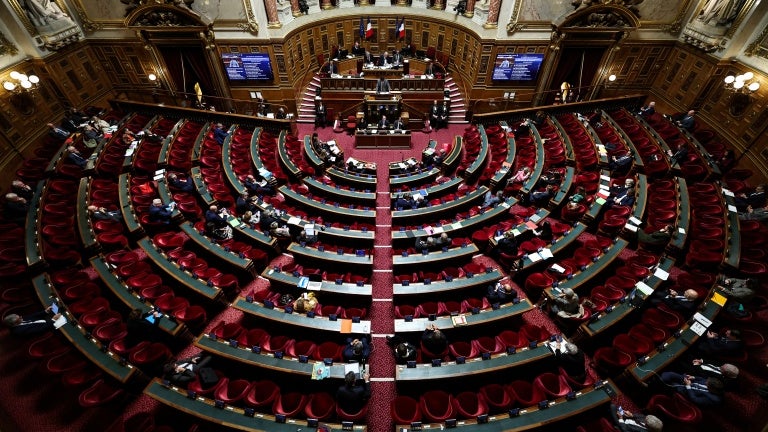
Unsurprisingly, the Senate adopted the Social Security budget without too much difficulty this Wednesday, November 18. With XX votes for and XX against, the upper house validates a text which sets a deficit objective reduced to 14 billion euros for 2027. Certainly, the amount is a little beyond the government's target in the initial version of the bill (12.7 billion euros).
But this nevertheless remains well below the 21.8 billion estimated by the end of 2026 while the current Social Security budget, voted late at the start of the year, planned to fall below the symbolic threshold of 20 billion, lowering the deficit to 19.4 billion euros. No deindexation of retirement pensions It must be said that the senators increased the bill by voting against the partial deindexation of pensions, which the government proposed to apply to pensions whose amount exceeds 1,260 euros.
A measure, which was to bring in no less than 4.1 billion euros to the Social Security coffers. To compensate for these losses, the Senate apparently negotiated a compromise in order to concentrate efforts on the tax aspect. In its draft finance law (PLF), which will be examined at the Palais du Luxembourg on Friday, the government plans to save 1.4 billion euros by reducing it to 3.
000 euros instead of 4,439 euros today, the tax relief ceiling of 10% which allows income tax to be reduced. The senators suggest hitting them more strongly, by removing this tax loophole which benefits the wealthiest retirees more, while maintaining the indexation of pensions to inflation in order to protect the most modest.
Return of the 2023 pension reform In addition to this budgetary adjustment, the senators also, and above all, voted for an amendment which reinstates the pension reform initiated in 2023, which the government had agreed to suspend as a concession to the left, to have the budgetary texts voted on in 2026. Thus, if we stick to the copy coming out of the Palais du Luxembourg, the legal retirement age should gradually rise to 64 years and the number of quarters should extend to 172 to receive a full pension. Currently, due to the suspension, the legal retirement age is fixed at 62 years and 9 months and the contribution period at 170 quarters.
There is little chance, however, that such a measure will be retained in the final version of the Social Security budget, just a few months before the presidential election. “We have a little consistency in our position,” declared Labor Minister Jean-Pierre Farandou before parliamentarians in the upper house. The time is rather "a new reform", he added, pointing out the various projects of the contenders for the Élysée.
A small temporary gesture to employers The senators also increased the Social Security deficit by 900 million euros by postponing by one quarter the implementation of the measures planned by the government to increase employer contributions. In the initial version of the Social Security financing project, it is in fact planned to broaden the basis for calculating general reductions by including value sharing, participation and profit-sharing bonuses paid to employees. All this, with an estimated return of 3.7 billion euros over the full year.
While this measure was to be implemented on January 1, the parliamentarians at the Palais du Luxembourg preferred to postpone it until April 1. As the centrist general rapporteur Olivier Henno underlined, it is indeed a question of "drawing the consequences of the decisions taken during the social conference" which was held on November 9 in Matignon. After bringing together unions and employers, the Lecornu government has in fact announced new upcoming negotiations in order to reform the system of general relief.
These will last three months, until March 31, 2027. No mutual surcharge but transfers of charges In the field of health, the government is counting on 5.1 billion euros in additional savings planned in the Social Security financing bill for 2027. These are in addition to those already provided for by decrees, such as the indexation of the ceilings for medical franchises and fixed contributions on inflation or the reduction in reimbursement rates for certain medications, dental care or even medical transport journeys.
In detail, savings are planned on medicines and medical devices, in particular via price reductions requested from manufacturers, of the order of 2 billion euros. Regarding complementary health insurance, the senators rejected the renewal of the 2.05% surcharge on contracts, estimated at 1.1 billion euros by the government. Already applied in 2026, this was initially of an exceptional nature and was not originally intended to be renewed.
The senators therefore opposed it, emphasizing the impact of such a measure on the amount of premiums payable by policyholders, which increase year after year. However, in return, the senators adopted an increase in the transfer of charges to complementary funds to 1.8 billion euros instead of 700 million. They also introduced a new daily rate payable by patients during an outpatient visit to the hospital (i.e. without an overnight stay) "in order to better take into account the costs borne by health establishments and to support the development of this mode of care".
This should nevertheless be covered by complementary health insurance as part of the responsible contract, in the same way as other hospital packages already in force. The rabbit tax resurfaces As in previous years, senators also reopened the debate on unkept medical appointments. They adopted an amendment which introduces a “rabbit tax”, a financial penalty against patients who do not come to the office without notifying the practitioner in advance.
In detail, the parliamentarians of the upper house suggest leaving "the possibility for health professionals and establishments to require their patients to pay a penalty when they do not show up for a consultation or when they cancel it before the scheduled date without respecting a reasonable deadline". However, this financial penalty "cannot be claimed when the patient has a compelling reason", it is specified. In practice, the senators suggest going through a "bank pre-authorization offered on an optional basis by the establishment or the health professional to the patient when making an appointment, which can be freely accepted by the patient without conditioning the acceptance of the appointment in the event of refusal".
But the provision has little chance of succeeding, the Constitutional Council having already censored a similar measure in 2025. New tax on sweet products In terms of food, senators approved the new tax proposed by the government on "processed, packaged" products, which contain added sugars and additives. A measure designed to fight obesity and the progression of chronic diseases.
The yield hoped for by the government is around 300 million euros. The senators also reduced the "premix tax", that is to say alcoholic and sugary mixtures, to drinks containing up to 25% alcohol, compared to 12% today. Adopted against the advice of the government, an amendment explicitly mentions cans of the “Vody” brand, popular with young people.
Due to a festive image, ease of use and effective marketing, these sugary and highly alcoholic drinks are popular with young consumers, particularly in the West Indies. Challenges promoting “binge drinking” have, for example, circulated on social networks. In May 2025, Guadeloupean MP Olivier Serva (LIOT) denounced the responsibility of these drinks in several road accidents, noting that one can represented "the equivalent of four shots of vodka in a row".
In Ivory Coast, "Vody" drinks have even been banned since 2023. Toughened rights for foreigners Despite strong opposition from the left and even the presidential camp, the Senate gave the green light to a measure desired by the government, which toughens the rights of non-European foreigners in France. Specifically, it is planned to condition access to the majority of family benefits and personal housing assistance (APL) to non-European foreigners in a legal situation residing in France for at least one year.
Until now, they are not subject to a waiting period to claim these benefits. However, such a mechanism is not new, a waiting period of 5 years being required for these same groups to be able to receive active solidarity income (RSA).
Machine-translated from French
Not cross-checked yet
Only BFM Business reports this story so far. We show it as a single source until another newsroom confirms it.
- BFM Business18 Nov, 17:55
| Publisher BFM Business (established tier) | +76 |
| Detailed summary | +2 |
| Total | 78 |
Method: reports are grouped by the words of their headline and summary; each newsroom counts once; figures are read from the reports as published. Nothing here is written by an AI.